
Last updated September 22, 2026
Free visual inspection and a written scope of work before any mitigation begins - photos, moisture readings, and drying logs go in your claim file
The scope we write is the scope we bill. Anything new gets shown to you, in writing, before we touch it.
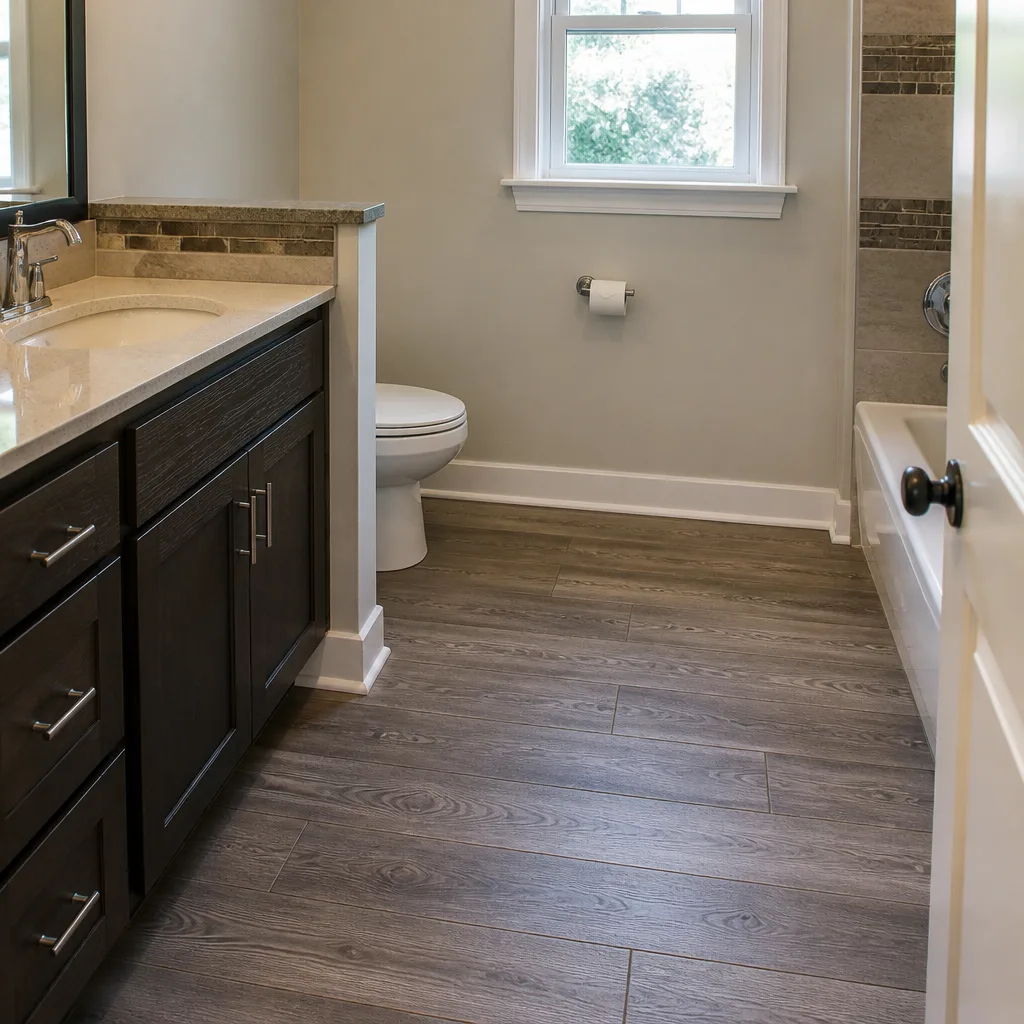
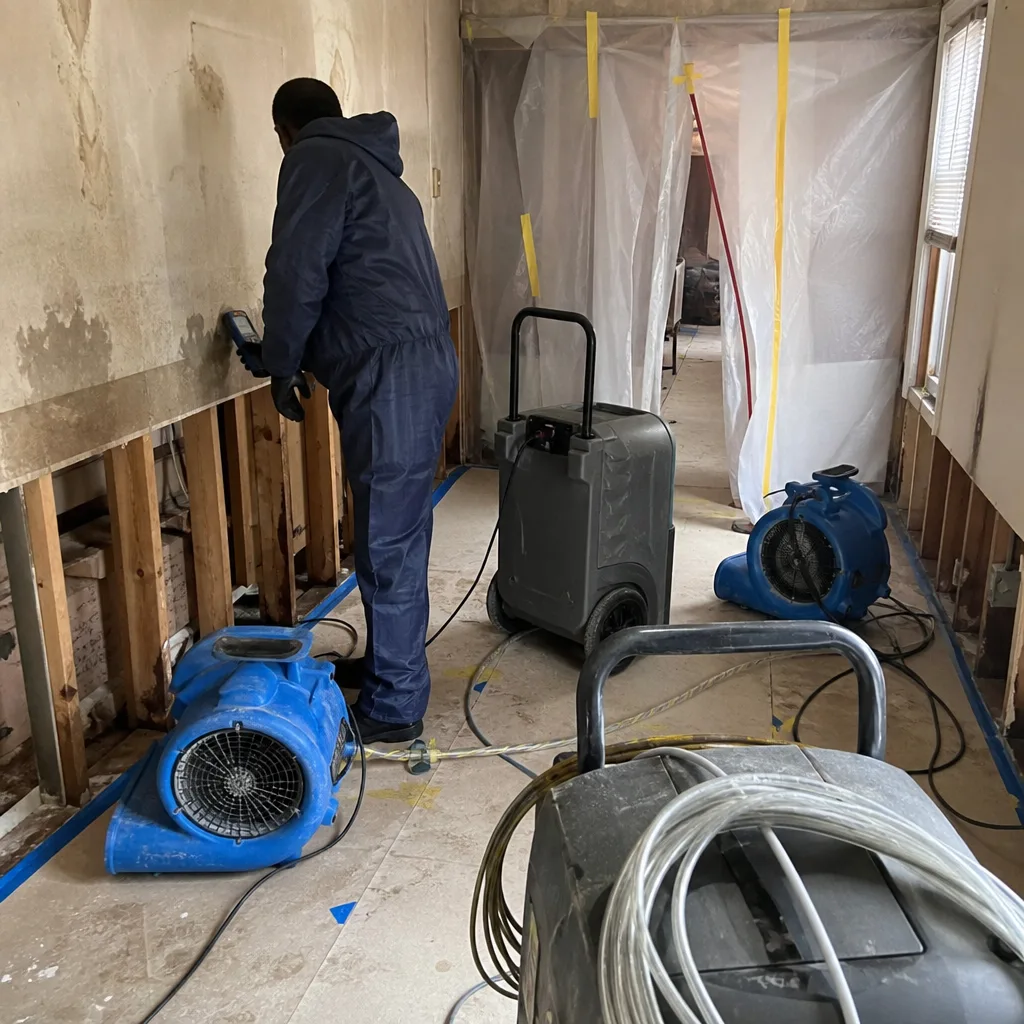 Before
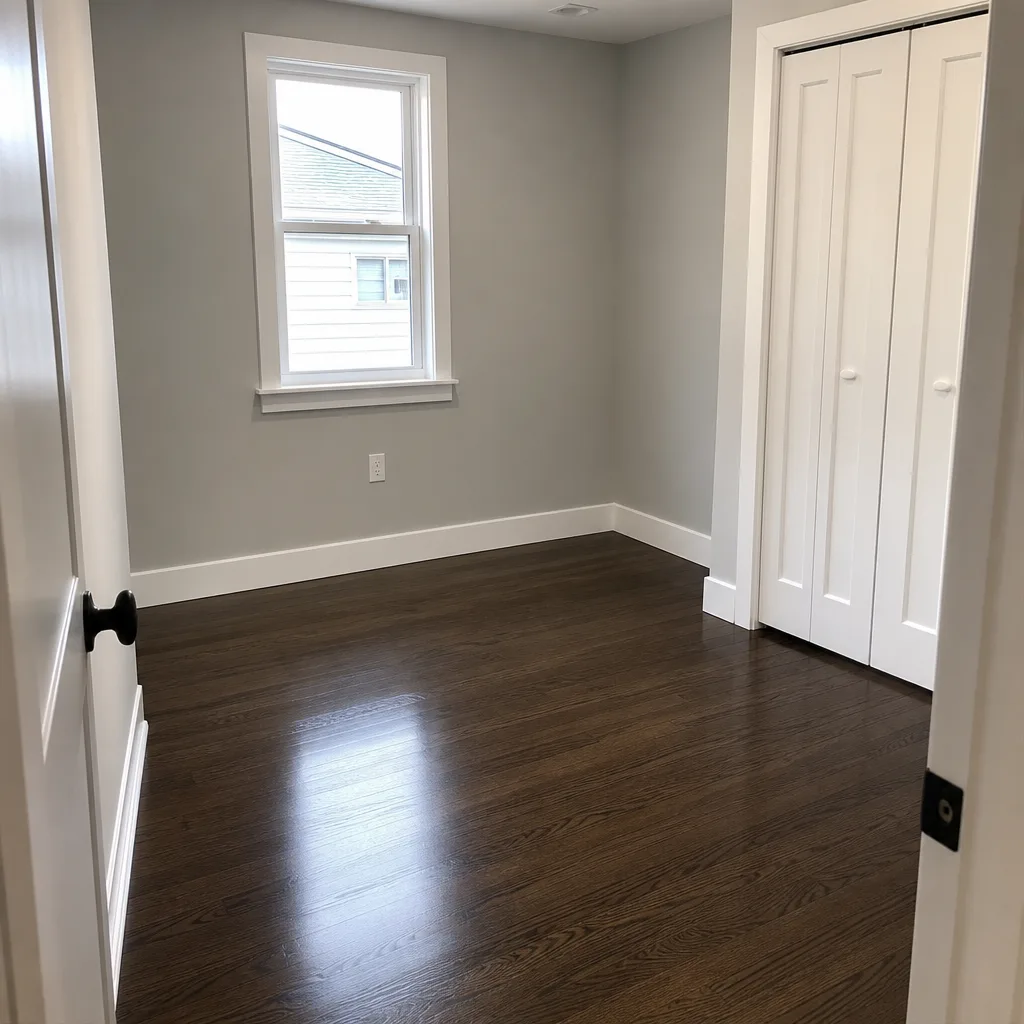 After
After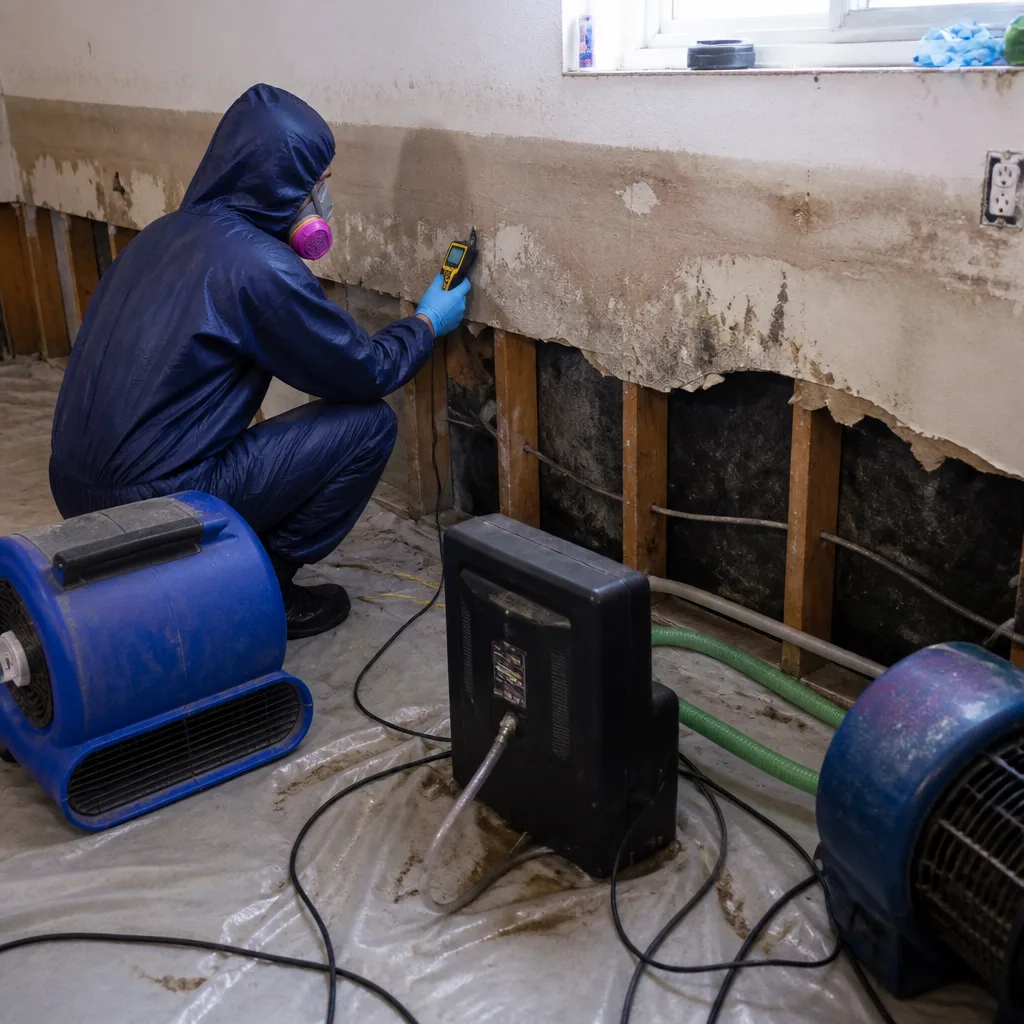 Before
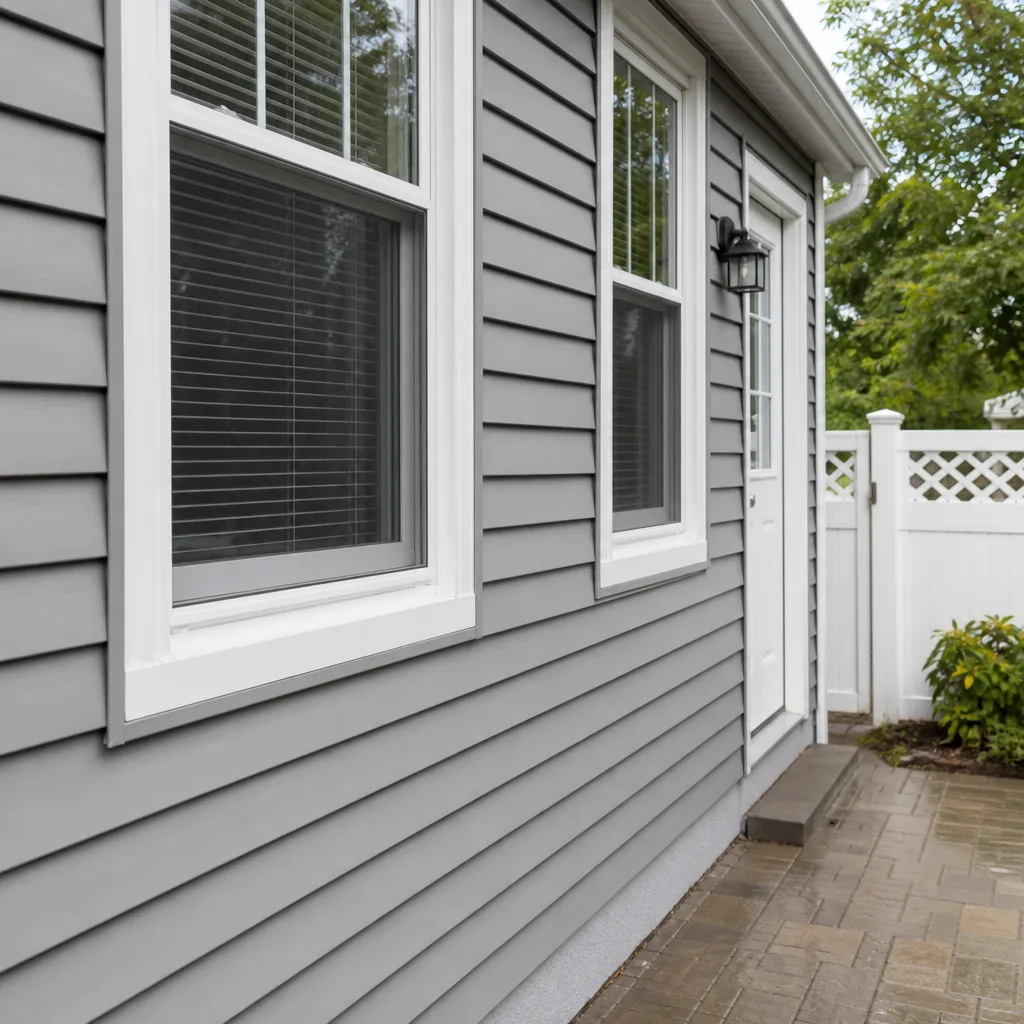 After
After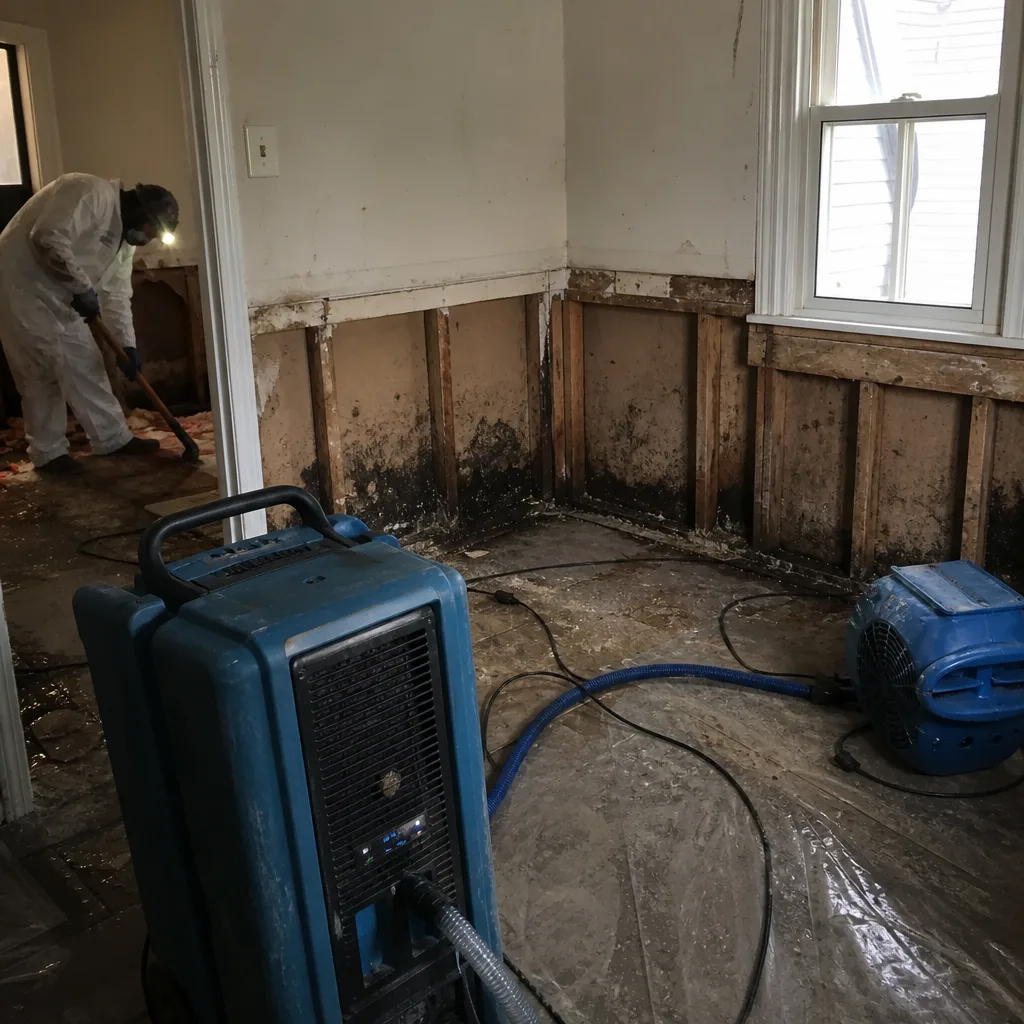 Before
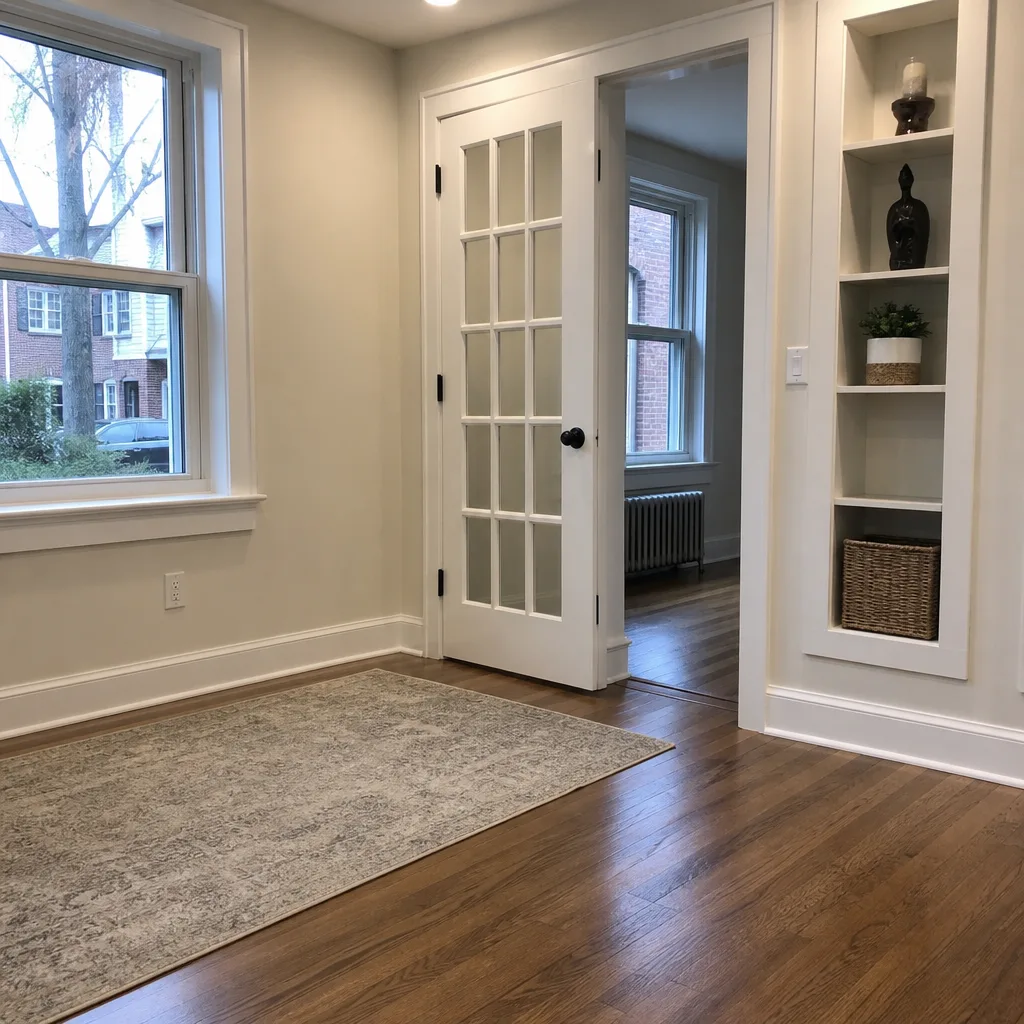 After
AfterThe Complete Guide to Damage Restoration in Flushing
Insurance carriers deny or underpay roughly 1 in 5 residential water and fire claims on first submission. In nearly every case, the missing element is documentation produced in the first 48 hours, not the damage itself. Most Flushing homeowners learn how restoration works by reading their denial letter or browsing more guides & resources. This guide reverses that. We’ll show you exactly what documentation an insurer requires at each stage, so your claim is built correctly from the first hour of damage, not reconstructed after the fact.
Quick Answer
Damage restoration in Flushing is the documented process of returning a property to its pre-loss condition after water, fire, mold, storm, or biohazard damage. A properly executed restoration in Flushing’s dense housing market requires timestamped photos, moisture baseline readings, and a written scope before any equipment is placed, followed by daily drying logs that justify every line item to your adjuster.
Table of Contents
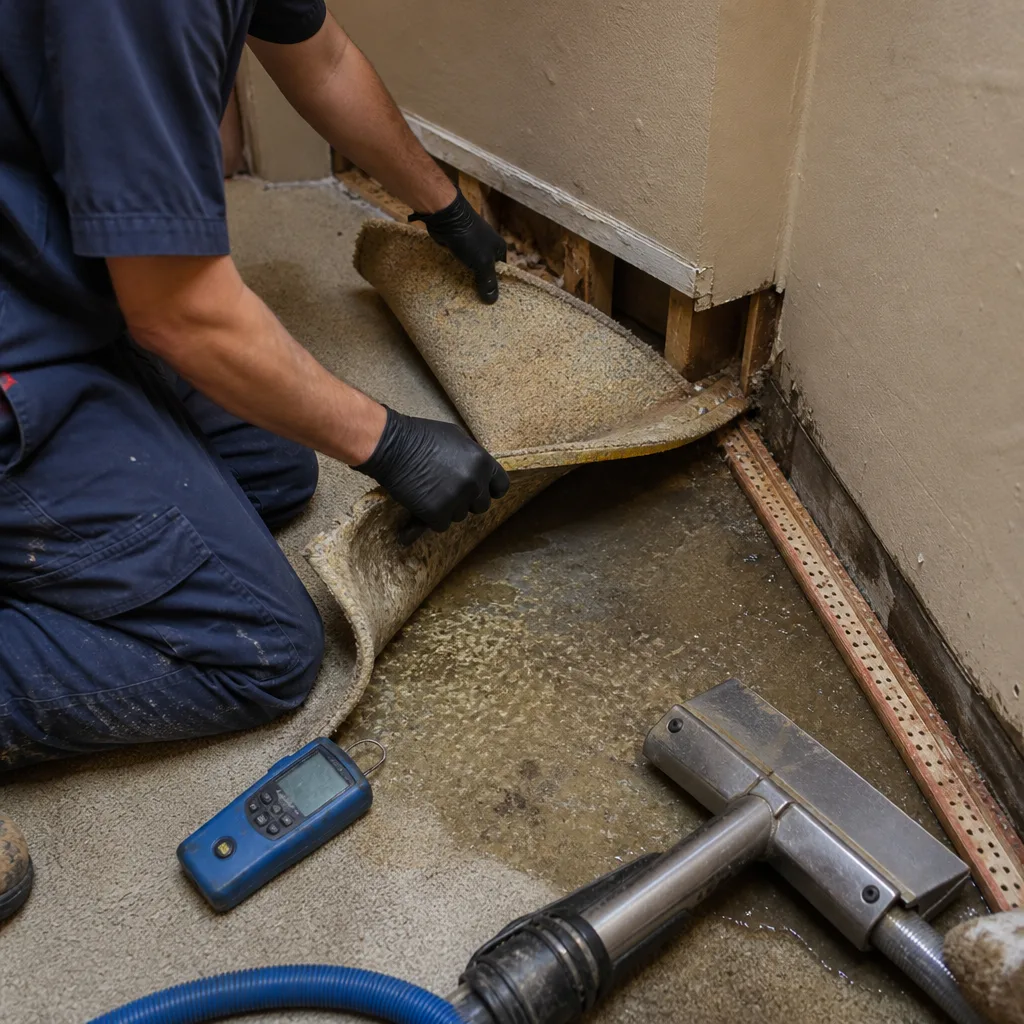
- Why Documentation Determines Whether Your Claim Gets Paid
- The First 48 Hours: What Must Happen Before Equipment Runs
- How Flushing’s Housing Stock Complicates Restoration Claims
- What a Daily Drying Log Actually Contains (and Why Adjusters Read It)
- Restoration Invoice vs. Documented Restoration File: Which Gets Paid
- How to Read a Certificate of Completion and Warranty
- Damage Restoration Costs in Flushing
- Choosing a Restoration Company in Flushing
BeforeAfterWhy Documentation Determines Whether Your Claim Gets Paid
We’ve reviewed thousands of claim files since 2011. The pattern is consistent: carriers don’t dispute that damage occurred. They dispute whether the work billed was necessary, whether the equipment ran for the hours claimed, and whether the scope expanded beyond the original loss.
The solution is documentation that starts before the first fan spins. Here’s what that looks like in sequence:
- Timestamped photo record of the loss area - every angle, every wet surface, every soot pattern, with metadata intact. These photos establish the baseline that all subsequent work is measured against.
- Moisture content readings - taken with calibrated pinless or pin-type meters, recorded by room and material. For wood framing, we document readings below 16% moisture content; for drywall, below 12%; for concrete substrates, below 4% using calcium chloride testing or in-situ relative humidity probes. These numbers define “dry” in a way an adjuster can verify.
- Written scope of work with line-item pricing - delivered and signed before work begins. Haven Standard, Clause 1: written price before work starts. No exceptions.
- Psychrometric data - temperature, relative humidity, and vapor pressure differential recorded at each visit. Vapor pressure differential is the force that drives moisture from wet materials into the air; we measure it to prove our drying strategy is working, not just running equipment.
- Daily drying log with equipment serial numbers and runtime hours - this is the document adjusters scrutinize most closely.
Without these five elements, your restoration invoice is just a bill. With them, it’s a claim file that moves through review without supplemental fights.
We’ve seen Flushing homeowners receive initial denials on $15,000 water losses because the restoration company started demolition before photographing the source. We’ve also seen $4,000 mold jobs sail through because the documentation trail was complete from hour one. The difference is never the damage. It’s the file.
The First 48 Hours: What Must Happen Before Equipment Runs
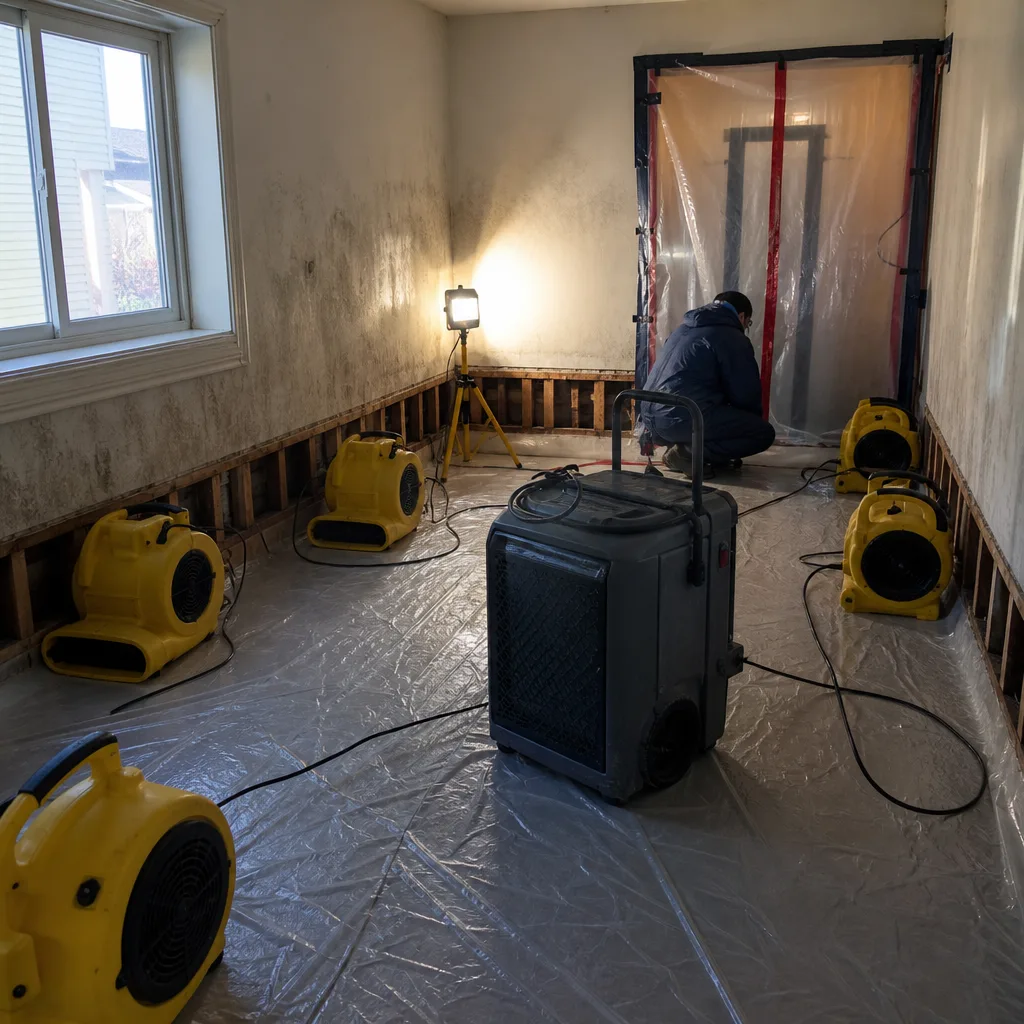
The first 48 hours after damage are when most documentation failures occur. Water is still moving. Smoke residues are setting. Mold spores are germinating. The pressure to act fast is real, but acting without documenting destroys more claims than delayed response ever does.
Here’s the sequence we follow on every Water Damage Restoration in Flushing call:
Hour 0-2: Arrival and containment
Our technician arrives with a numbered photo log sheet. Before touching anything, they photograph: the water source (if identifiable), the migration path across floors or down walls, the farthest point of visible saturation, and all adjacent unaffected areas for comparison. These comparison shots are critical. Adjusters are trained to look for them.
Moisture readings follow immediately. We record: affected square footage, material classification (Category 1, 2, or 3 water per IICRC S500), and baseline moisture content of both wet and dry materials. This baseline proves what was damaged and what wasn’t.
Hour 2-8: Written scope delivery
The scope includes: equipment count and type (air movers, dehumidifiers, air scrubbers, injection drying systems), projected duration based on psychrometric calculations, demolition requirements if any, and line-item pricing. The homeowner reviews and signs. Haven Standard, Clause 1. No work starts before this signature.
Hour 8-48: Equipment placement with verification
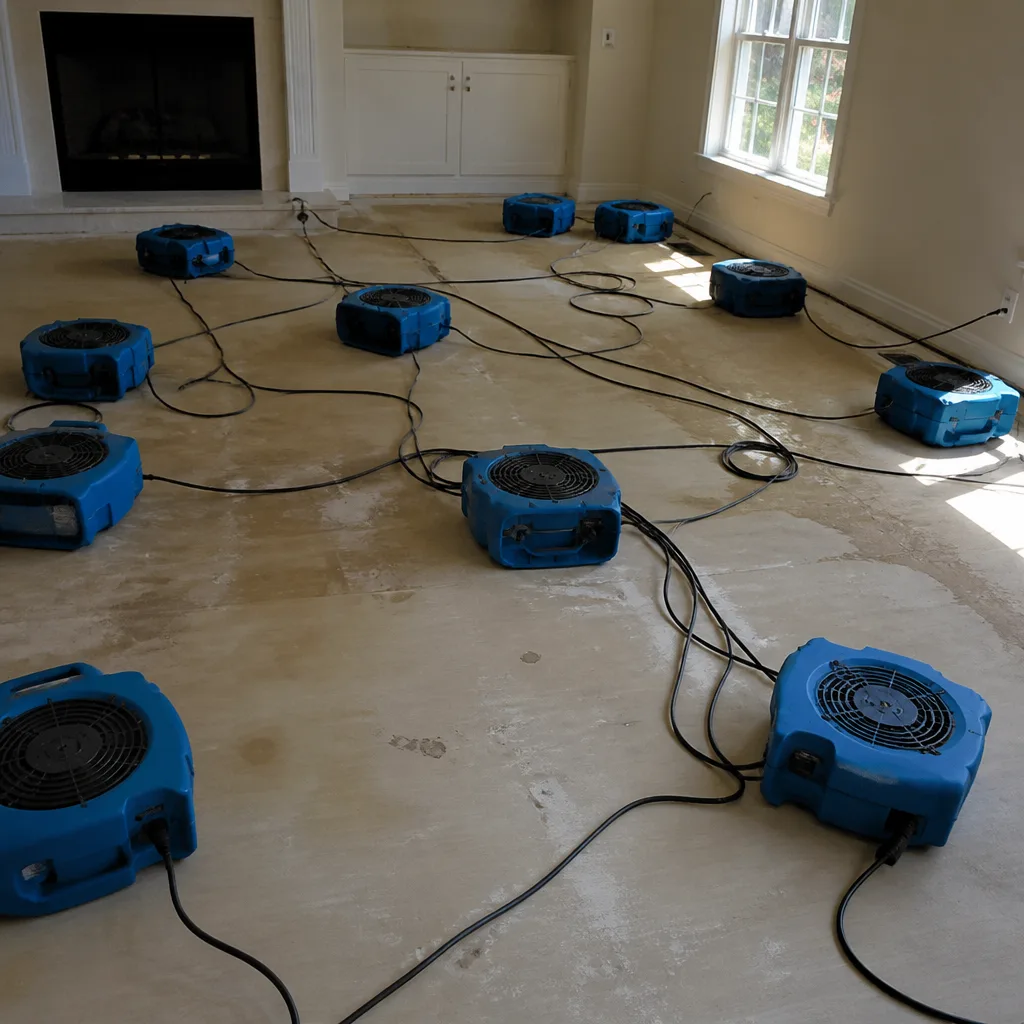
Equipment is placed according to the scope, photographed in position with serial numbers visible, and connected to power sources that won’t overload Flushing’s older electrical systems. Many Flushing rowhouses still have 100-amp service; we calculate load before plugging in multiple 12-amp dehumidifiers and air movers.
The first 24-hour drying log is started. It records: time of equipment check, relative humidity and temperature at three points in the affected area, moisture content of two representative materials, and any adjustments to equipment placement.
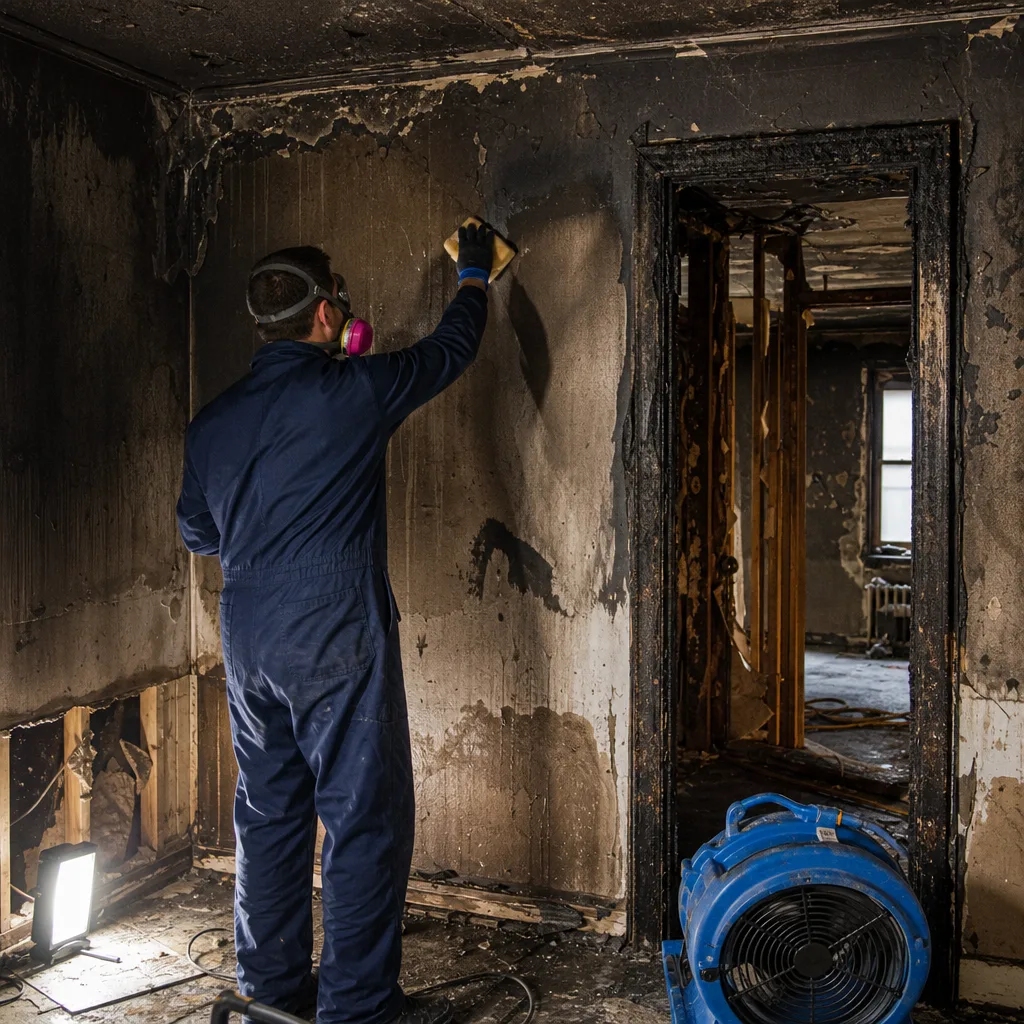
This sequence applies equally to Fire & Smoke Damage Restoration in Flushing, where documentation must capture: pre-cleaning photos of all surfaces, identification of synthetic vs. natural smoke residues (they require different cleaning chemistry), and chain-of-custody documentation for any contents moved offsite.
How Flushing’s Housing Stock Complicates Restoration Claims
Flushing’s built environment creates restoration scenarios that detached-home guides never address. Understanding these complications before damage occurs-along with Damage Restoration Warning Signs: A Flushing Homeowner’s Reference Guide-helps you ask the right questions when selecting a contractor.
Attached rowhouses and party walls
Water migration doesn’t respect property lines. In Flushing’s attached housing, a burst pipe in 142-XX can saturate the party wall and appear as staining in 142-XX two days later. The originating homeowner’s policy covers their structure. The neighbor’s policy covers theirs. But moisture meters don’t read deeds.
We document party wall moisture readings on both sides, with written acknowledgment from affected neighbors when accessible. This prevents the originating carrier from denying coverage for “unrelated pre-existing conditions” on the neighbor’s claim, and vice versa.
Basement apartments and illegal conversions
Flushing has a significant stock of below-grade dwelling units, some permitted, some not. A Category 3 water loss in an illegal basement apartment triggers coverage questions that a legal unit avoids. We document: ceiling height, egress window presence, separate utility meters, and certificate of occupancy status when visible. This doesn’t determine coverage, but it equips the adjuster to make an informed decision rather than a blanket denial.
Co-op and condo common elements
Many Flushing buildings operate under co-op or condo associations with master policies that cover common elements and individual policies that cover unit interiors. A water line break in a common wall can damage: the wall itself (master policy), flooring in Unit A (individual policy), and ceiling in Unit B (individual policy, but origin is common element). We map damage by ownership category in our initial documentation, so three separate adjusters each receive a file relevant to their coverage.
Older electrical and plumbing systems
Pre-war construction in Flushing neighborhoods near Kissena Park and the historic district often contains knob-and-tube wiring remnants, galvanized supply lines, and cast iron drains. These systems fail differently than modern materials. Galvanized pipe corrosion causes pinhole leaks that spray intermittently, producing hidden damage over months. We document corrosion patterns and flow characteristics to distinguish sudden accidental discharge from long-term leakage, which most policies exclude.
Seasonal factors
Flushing’s freeze-thaw cycles stress flat roofs common on commercial strips and some residential buildings. Ice dam formation on low-slope roofs causes water intrusion that mimics plumbing leaks. We document exterior conditions, roof drainage patterns, and attic temperature readings to establish cause of loss for the adjuster.
What a Daily Drying Log Actually Contains (and Why Adjusters Read It)
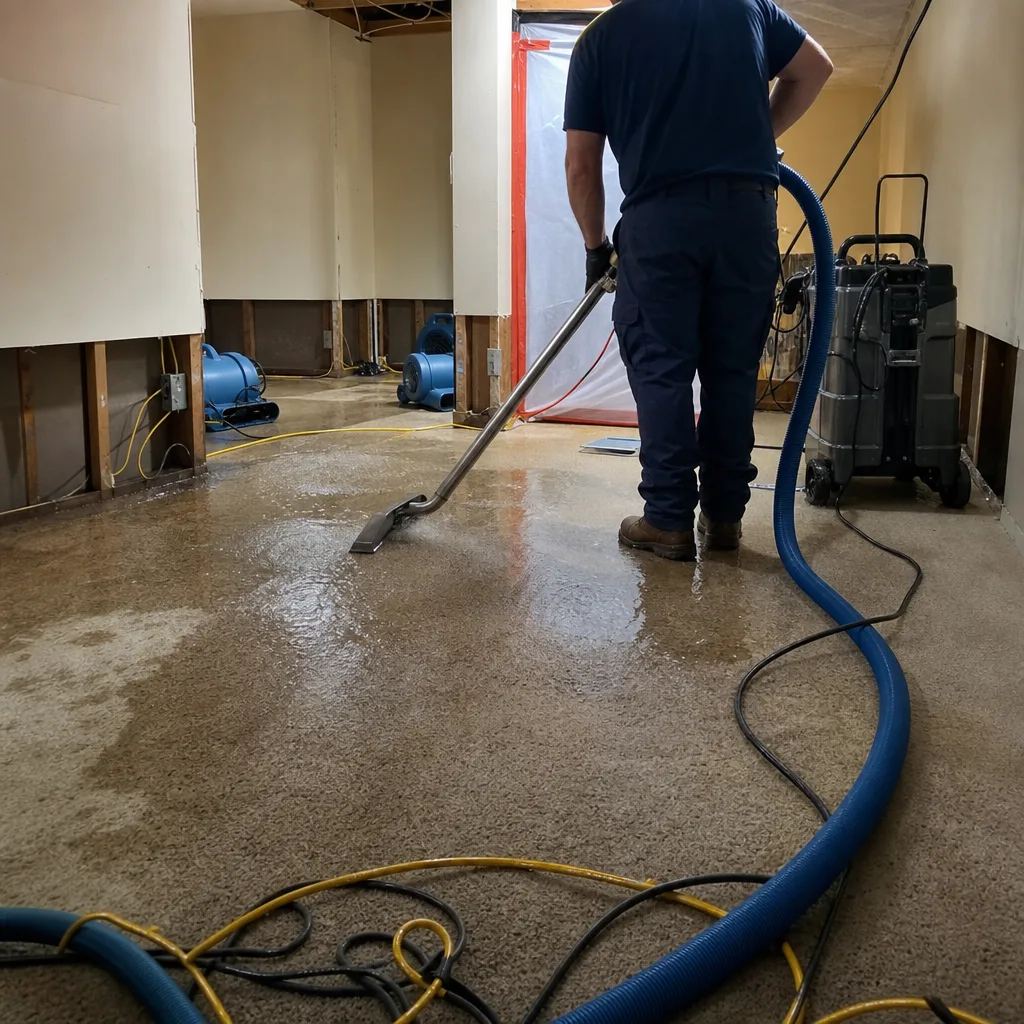
The daily drying log is the most scrutinized document in a water damage claim. Adjusters use it to verify that equipment ran for the hours billed, that conditions improved predictably, and that the restoration company wasn’t charging for inactive or ineffective drying.
Here’s what a proper log contains, with explanations of why each field matters:
- Date and time of technician visit - establishes that monitoring occurred, not just equipment rental.
- Technician name and license number - traceability. Our technicians are background-checked, uniformed, and licensed, with numbers recorded on every log.
- Equipment inventory by serial number - prevents billing for equipment that was removed or never placed. Serial numbers are cross-referenced to the initial scope.
- Runtime hours from hour meters - not estimates. Phoenix and Dri-Eaz dehumidifiers have built-in hour meters. We photograph these readings.
- Temperature and relative humidity at three locations - shows whether the drying chamber is controlled. We target 70-80°F and 30-50% RH for optimal evaporation.
- Grain depression calculation - the difference between outside and inside humidity, measured in grains of moisture per pound of air. Positive grain depression proves the dehumidifier is removing moisture faster than the air is absorbing it.
- Vapor pressure differential - the force driving moisture from materials to air. We calculate this using psychrometric software. A VPD below 10 millibars indicates tertiary drying, where specialized techniques like heat drying or injection systems become necessary.
- Moisture content of representative materials - same locations as baseline readings, showing progression toward dry standard.
- Equipment adjustments - additions, removals, or relocacements with justification. If we add an Injectidry system for hardwood floor drying, we note the moisture gradient that triggered it.
- Technician signature - accountability. No unsigned logs are submitted to carriers.
Adjusters know that incomplete logs often indicate incomplete monitoring. A log that skips days, omits serial numbers, or records identical readings across multiple visits raises red flags. We’ve reviewed competitor files where the same relative humidity reading appeared for five consecutive days in a house with active water damage. That file required a supplemental inspection that delayed payment by weeks.
Our daily drying logs are produced to IICRC, RIA, and IFA standards and included as standard deliverables on every job. They’re not an upsell. They’re the documentation that turns restoration invoices into payable claims.
Restoration Invoice vs. Documented Restoration File: Which Gets Paid
There’s a critical distinction that most homeowners don’t learn until they’ve already hired the wrong company. A restoration invoice lists services and charges. A documented restoration file proves those services were necessary, properly executed, and successful. Carriers pay the second one.
The invoice alone contains:
- Line items with quantities and rates
- Total charges
- Payment terms
The documented file contains:
- All of the above, plus
- Timestamped photo record from initial through final inspection
- Moisture baseline and progression readings
- Written scope signed before work began
- Daily drying logs with equipment serial numbers and runtime hours
- Psychrometric data showing controlled drying conditions
- Certificate of Completion with warranty terms
- Direct adjuster coordination notes and correspondence
We’ve handled Flushing claims where the initial restoration company submitted only an invoice and received a 40% underpayment. The carrier’s position: “We have no evidence that 12 air movers ran for 72 hours.” The homeowner then faced a choice: accept the underpayment, pay the difference out of pocket, or hire us for a supplemental documentation review.
Our Free Second Opinion on any competitor’s written estimate includes a documentation gap analysis. We identify what’s missing from the file and what documentation would be required to support full payment. Sometimes we can produce it retroactively. Often we can’t, because the critical first 48 hours have passed without proper recording.
The 12,000+ homes we’ve restored since 2011 share one common element: every one had a written price before work started and a documented record when the crew left. This is why our claims move through carrier review without the supplemental fights that delay other homeowners.
How to Read a Certificate of Completion and Warranty
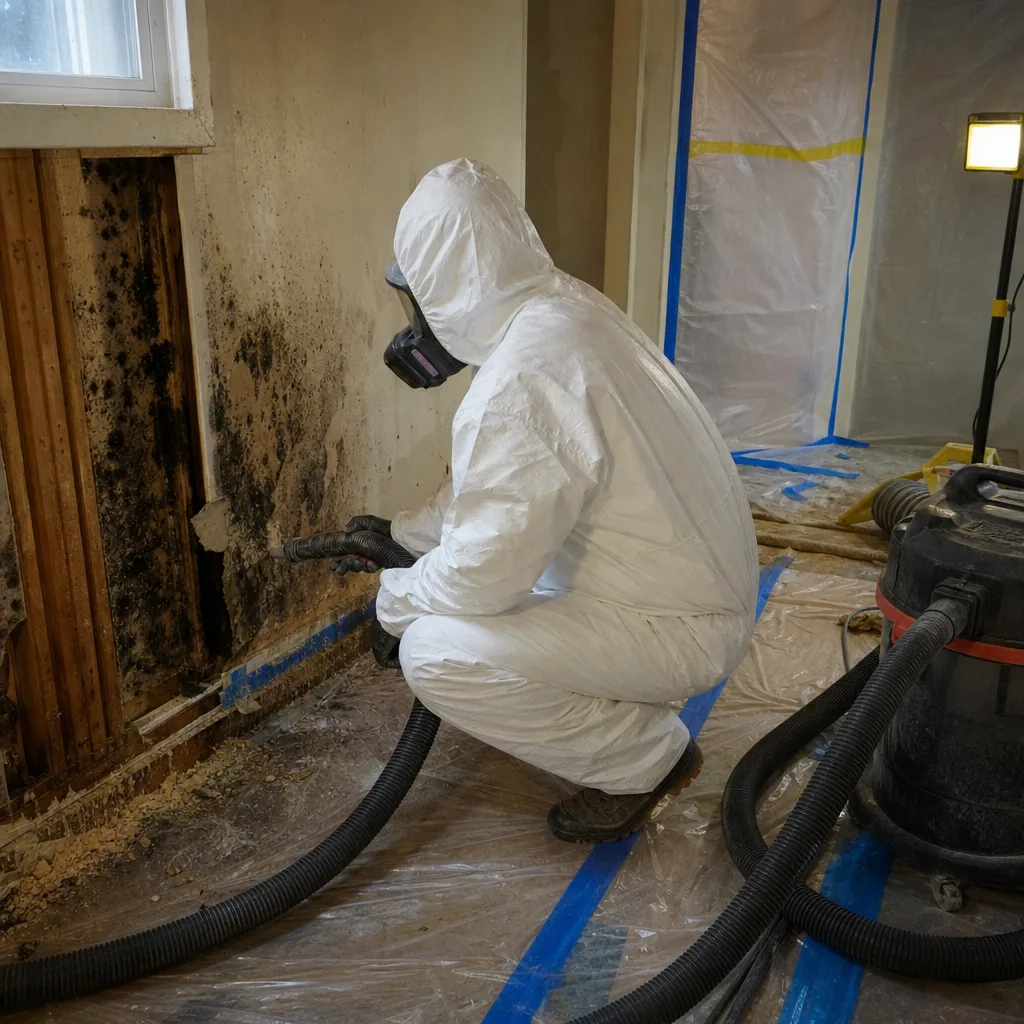
The Certificate of Completion is your proof that restoration was performed to standard and your protection against future failure. Most homeowners file it with their insurance paperwork and never examine it. You should read it carefully before signing, because it defines what you’re actually receiving.
Required elements of a valid certificate:
- Property address and date of completion - must match the loss location and your records.
- Scope of work performed - should reference the original written scope by date and document the actual work completed, including any changes.
- Final moisture readings - documented proof that materials reached dry standard. Without these, you have no evidence that drying was successful.
- Equipment removal confirmation - with final runtime hours and serial numbers.
- Warranty terms in writing - not verbal, not “call us if you have problems.” Written, with specific duration, coverage scope, and claim procedure.
- Company license information and signature - traceability to a responsible party.
Our Certificate of Completion includes the 365-Day Done Right Promise under The Haven Standard. The warranty clause specifies: if any work performed fails due to our materials or workmanship within 365 days, we return and correct it at no charge. This is a signed guarantee, not a marketing line. It covers: re-emergence of mold in treated areas, re-wetting from improperly sealed sources, odor return from incomplete smoke remediation, and structural failure of reconstruction work we performed.
What it does not cover: new damage from unrelated causes, damage from homeowner modifications after our completion, or pre-existing conditions documented but not included in the original scope. These exclusions are stated plainly, not buried in fine print.
When reviewing any restoration company’s certificate, verify that warranty terms are specific enough to enforce. “Satisfaction guaranteed” is not enforceable. “We warranty our workmanship for one year against defects in materials and installation, with return service at no charge” is.
Damage Restoration Costs in Flushing
Pricing visibility is a trust signal. Haven Standard, Clause 1 exists to end the industry habit of hiding prices until the crew is inside your home. Below are typical ranges for Flushing’s market, drawn from our Damage Restoration Cost Breakdown: The Flushing Homeowner’s Reference for 2026, reflecting local labor rates, material costs, and permit requirements.
Water Damage Restoration
| Service | Typical Range |
|---|---|
| Emergency water extraction (per affected area) | $350 – $750 |
| Structural drying (per day, equipment and monitoring) | $150 – $400 |
| Hardwood floor drying (Injectidry system) | $500 – $1,200 |
| Drywall removal and disposal (per 4×8 sheet) | $45 – $85 |
| Insulation removal and replacement (per square foot) | $2.50 – $5.00 |
| Category 3 sewage cleanup (per square foot) | $7.00 – $15.00 |
Fire & Smoke Damage Restoration
| Service | Typical Range |
|---|---|
| Contents pack-out and inventory (per room) | $400 – $900 |
| Structural cleaning (per square foot) | $3.00 – $8.00 |
| Odor removal and thermal fogging (per treatment area) | $250 – $600 |
| Soot removal from HVAC system | $450 – $1,100 |
Mold Remediation
| Service | Typical Range |
|---|---|
| Containment and air scrubbing (per contained area) | $300 – $700 |
| Remediated area (per square foot, including removal and treatment) | $15.00 – $30.00 |
| Post-remediation verification testing | $350 – $750 |
Reconstruction
| Service | Typical Range |
|---|---|
| Drywall installation and finishing (per 4×8 sheet) | $55 – $110 |
| Flooring replacement (per square foot, mid-grade materials) | $6.00 – $14.00 |
| Painting (per square foot) | $2.50 – $5.50 |
These ranges reflect Flushing’s specific market conditions: higher labor costs than outer Queens due to access and parking constraints, but competitive material pricing from nearby suppliers in College Point and Long Island City. Actual costs depend on damage extent, material accessibility, and whether asbestos or lead testing is required in pre-1978 construction.
Every job we perform receives a written price before work begins. No exceptions. Call (516) 386-9007 for an exact quote on your specific situation - estimates are free.
Choosing a Restoration Company in Flushing
The restoration industry has low barriers to entry and high variation in quality. A company with a polished website and 24-hour answering service may lack the documentation discipline that determines whether your claim is paid. Here’s how to evaluate providers.
Verify documentation practices before hiring
Ask specifically: Will you photograph everything before touching it? Will I receive a written scope with line-item pricing before work starts? Will you provide daily drying logs with equipment serial numbers? Will I receive a Certificate of Completion with final moisture readings and written warranty terms?
If any answer is no, or if the representative deflects with “we’ll go over all that when we get there,” continue your search. The documentation either exists as standard practice or it doesn’t.
Check for proper licensing and insurance
New York requires mold remediation contractors to hold Department of Labor licensure. Water and fire restoration requires no state-specific license, but reputable companies carry general liability, workers compensation, and pollution liability coverage and should follow Damage Restoration Permits, Codes & Inspections in NY: What You Need to Know. Request certificate of insurance naming you as additional insured for the project duration.
Evaluate equipment and standards
Professional-grade drying equipment from manufacturers like Dri-Eaz, Phoenix, and XPOWER produces measurable, documented results. Ask what equipment will be used and how runtime will be verified. Equipment should be sized to the loss using ANSI/IICRC S500 calculations, not guesswork.
Understand the warranty
Verbal assurances are meaningless in claim disputes. The warranty must be in writing, with specific duration, coverage, and claim procedure. Our 365-Day Done Right Promise under The Haven Standard is signed and stamped on every job.
Consider adjuster coordination
Direct insurance billing reduces your out-of-pocket burden and simplifies the process. We provide photo documentation and drying logs directly to adjusters, with written scope prepared in claim-compatible format. This coordination is standard, not an upsell.
Mold Remediation in Flushing requires additional scrutiny. Mold is the most oversold service in restoration, with unnecessary remediation common. A reputable company will distinguish between active growth requiring remediation and dormant staining requiring only cleaning, and will document this distinction with air and surface sampling analyzed by independent laboratories.
Common Mistakes to Avoid
- Starting cleanup before photographing the damage. Every photo not taken in the first hour is evidence lost forever. Adjusters cannot verify pre-loss conditions from memory.
- Signing a work authorization without a written price. This voids your ability to dispute charges and often triggers scope creep once the crew is inside. Haven Standard, Clause 1 exists because we’ve seen this pattern repeatedly in Flushing.
- Ignoring party wall moisture in attached housing. The neighbor’s staining that appears two days later becomes your liability if not documented at the initial inspection.
- Accepting “it looks dry” without moisture readings. Visual dryness means nothing. We once found 18% moisture content in drywall that appeared completely dry, three weeks after a competitor declared the job complete.
- Not requesting the daily drying log. This document belongs to you. Its absence suggests monitoring was not performed, which carriers use to justify underpayment.
- Hiring based on speed alone. Same-day response matters for water mitigation, but reconstruction should be scoped, scheduled, and priced in writing like any remodeling project. Promising immediate reconstruction is a red flag for inadequate planning.
- Neglecting to verify Certificate of Completion details. Vague warranty language, missing final readings, or absent license information makes the certificate unenforceable when you need it.
When to Call a Professional
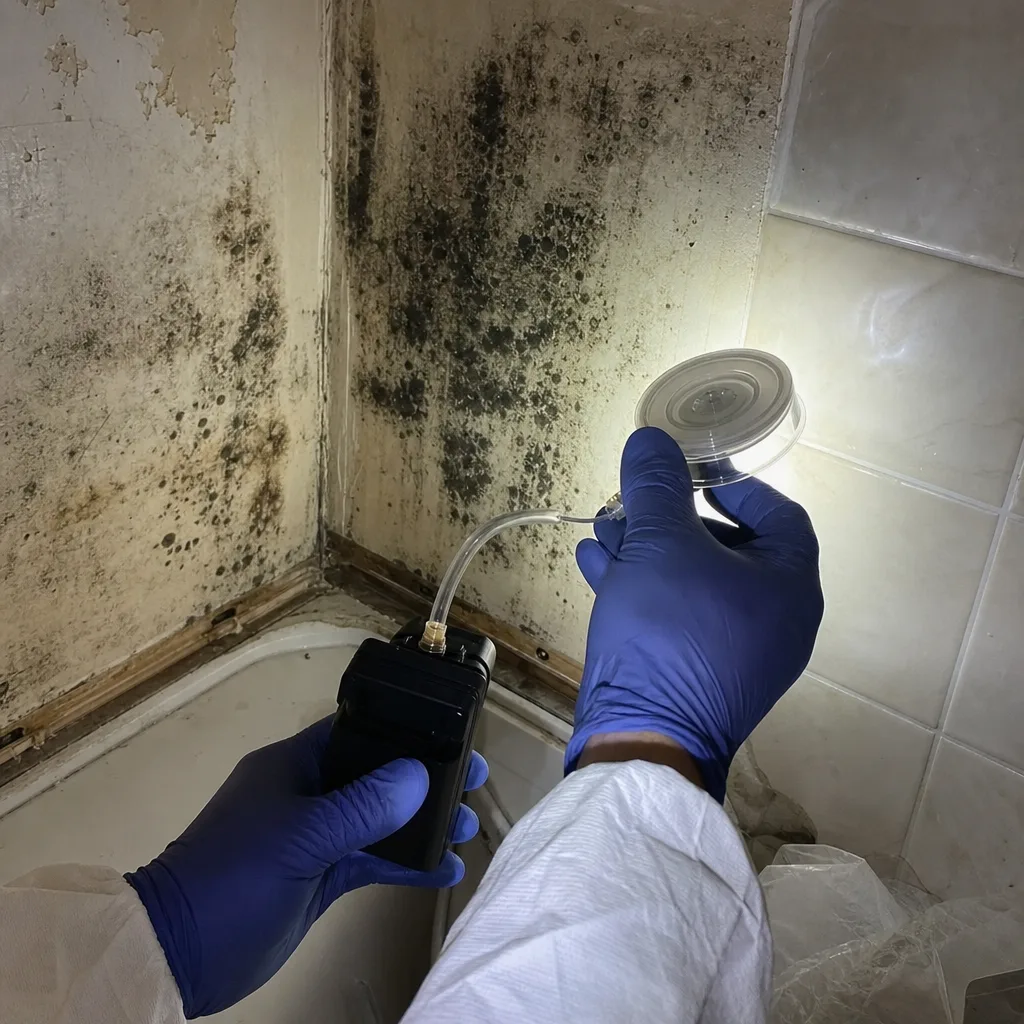
Call a professional restoration company when: water has affected structural materials (subfloor, framing, insulation), smoke or soot has contacted multiple rooms, mold growth covers more than 10 square feet, sewage or Category 3 water is present, or any biohazard situation exists. These scenarios require containment, specialized equipment, and documentation that homeowners cannot produce independently.
For smaller, contained situations, a homeowner may handle initial extraction and drying. But even then, documentation for insurance purposes should follow professional standards. We provide guidance on self-documentation for minor losses during our free estimate calls.
DryMark Restoration Flushing offers free estimates in Flushing - call (516) 386-9007. A live person answers every call, 24 hours a day, 7 days a week, with no voicemail trees. We’ll review your situation, explain what documentation will be required for your specific claim, and provide a written price before any work begins.
Frequently Asked Questions
Water damage restoration in Flushing typically ranges from $1,200 for contained, Category 1 losses to $8,000+ for multi-room Category 3 flooding with reconstruction. Category 3 sewage cleanup runs $7-$15 per square foot due to required PPE, disposal protocols, and antimicrobial treatment. Your exact cost depends on affected square footage, material type, and whether structural drying or reconstruction is needed. Call (516) 386-9007 for a written estimate - they’re free.
Insurance covers restoration costs when the cause of loss is a covered peril and the work is properly documented. The most common reason for partial denial is inadequate documentation from the first 48 hours, not the damage itself. Carriers also exclude long-term leakage, gradual deterioration, and flooding from outside rising water without separate flood coverage. We document cause of loss and produce claim-compatible files to support full payment. Call (516) 386-9007 to discuss your specific policy and loss.
For water mitigation and emergency situations, we dispatch immediately with live phone coverage 24 hours a day, 7 days a week. Response time to Flushing locations typically ranges from 45 minutes to 2 hours depending on traffic and time of day. Reconstruction work is scheduled, not dispatched, and requires a written scope with line-item pricing before scheduling. Speed language applies to mitigation only; rebuilding demands planning that same-day service cannot provide.
You need mold remediation when active growth exceeds 10 square feet, affects HVAC systems, or occurs in areas with moisture sources that cannot be immediately eliminated. You need cleaning only for dormant staining on non-porous surfaces with the moisture source permanently corrected. We distinguish these conditions with moisture mapping and, when indicated, air and surface sampling analyzed by independent laboratories. Unnecessary remediation is common in this industry; our documentation shows you exactly what is present and why treatment is or isn’t required.
We coordinate directly with adjusters as standard practice, providing: timestamped photo records, daily drying logs, written scopes with line-item pricing, and Certificates of Completion with final readings. This documentation is formatted for claim review, reducing supplemental requests and payment delays. You remain the policyholder and must authorize all communications, but our direct coordination removes the administrative burden from you during an already stressful period.
A valid Certificate of Completion must include: property address and completion date matching your records; scope of work performed with reference to original written scope; final moisture readings proving dry standard achievement; equipment removal confirmation with final runtime hours; written warranty terms with specific duration, coverage, and claim procedure; and company license information with signature. Our certificates include the 365-Day Done Right Promise under The Haven Standard, signed and stamped. Vague or verbal warranties are unenforceable - demand specifics in writing.
The Bottom Line
Damage restoration in Flushing succeeds or fails on documentation, not drama. The homeowners who receive full, timely claim payment are those whose restoration files contain: timestamped photos from hour one, moisture baselines and progression readings, written scopes signed before work starts, daily drying logs with verified equipment runtime, and Certificates of Completion with enforceable warranties. Everything else is secondary.
We’ve built our practice around this principle since 2011. The Haven Standard requires it. Our 12,000+ restored homes demonstrate it. And our Flushing customers benefit from claims that move through review without the supplemental fights that delay others.
Call (516) 386-9007 for a free estimate. A live person will answer, review your situation, and provide a written price before any work begins. That’s Haven Standard, Clause 1. No exceptions.
Written by Alicia Brennan, Owner at DryMark Restoration Flushing, serving Flushing since 2011.