
Last updated September 22, 2026
Free visual inspection and a written scope of work before any mitigation begins - photos, moisture readings, and drying logs go in your claim file
The scope we write is the scope we bill. Anything new gets shown to you, in writing, before we touch it.
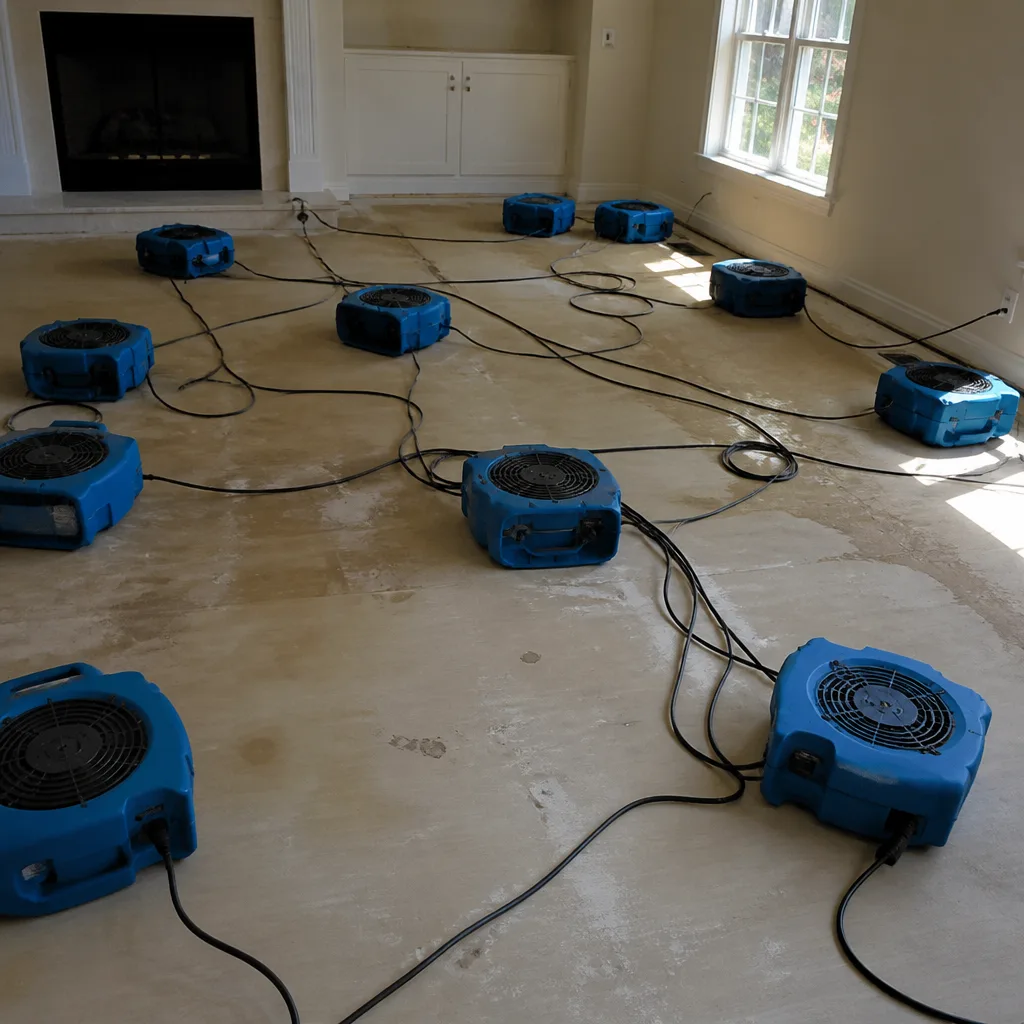
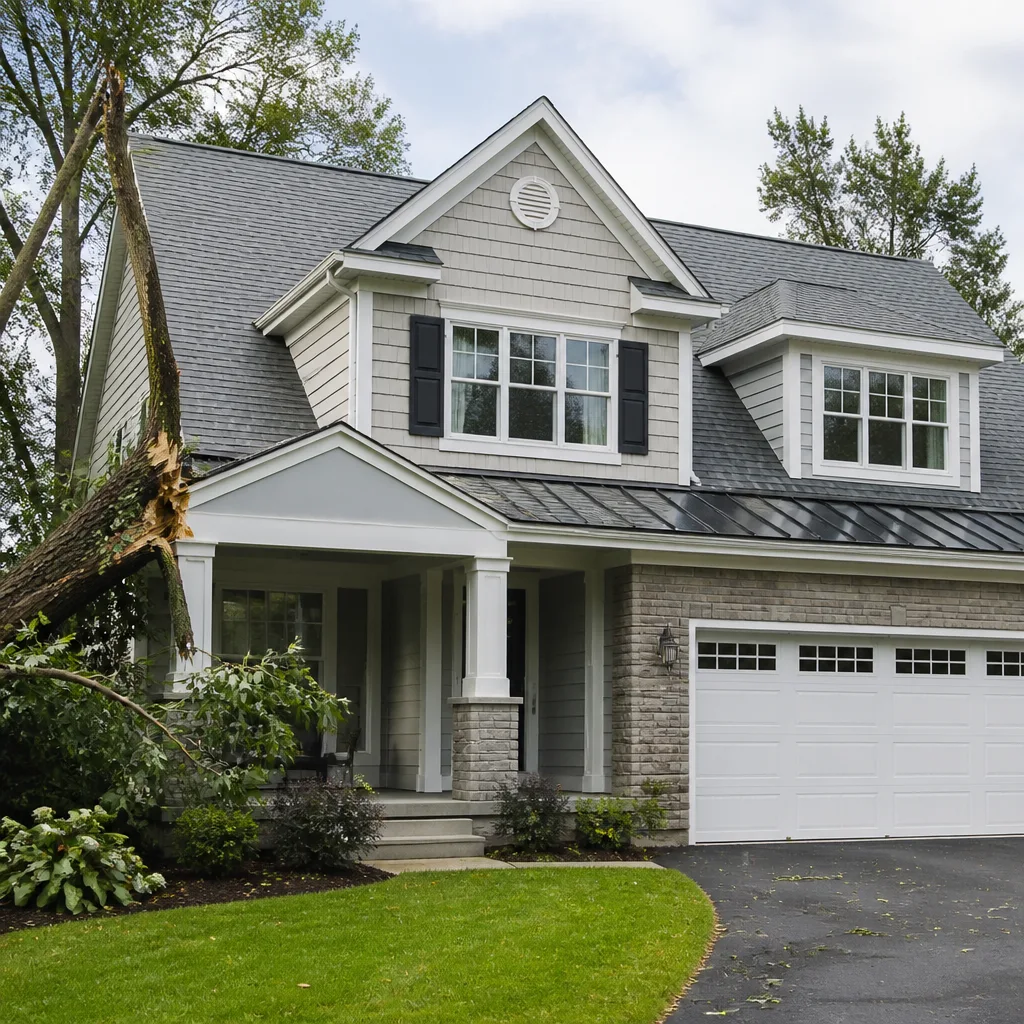
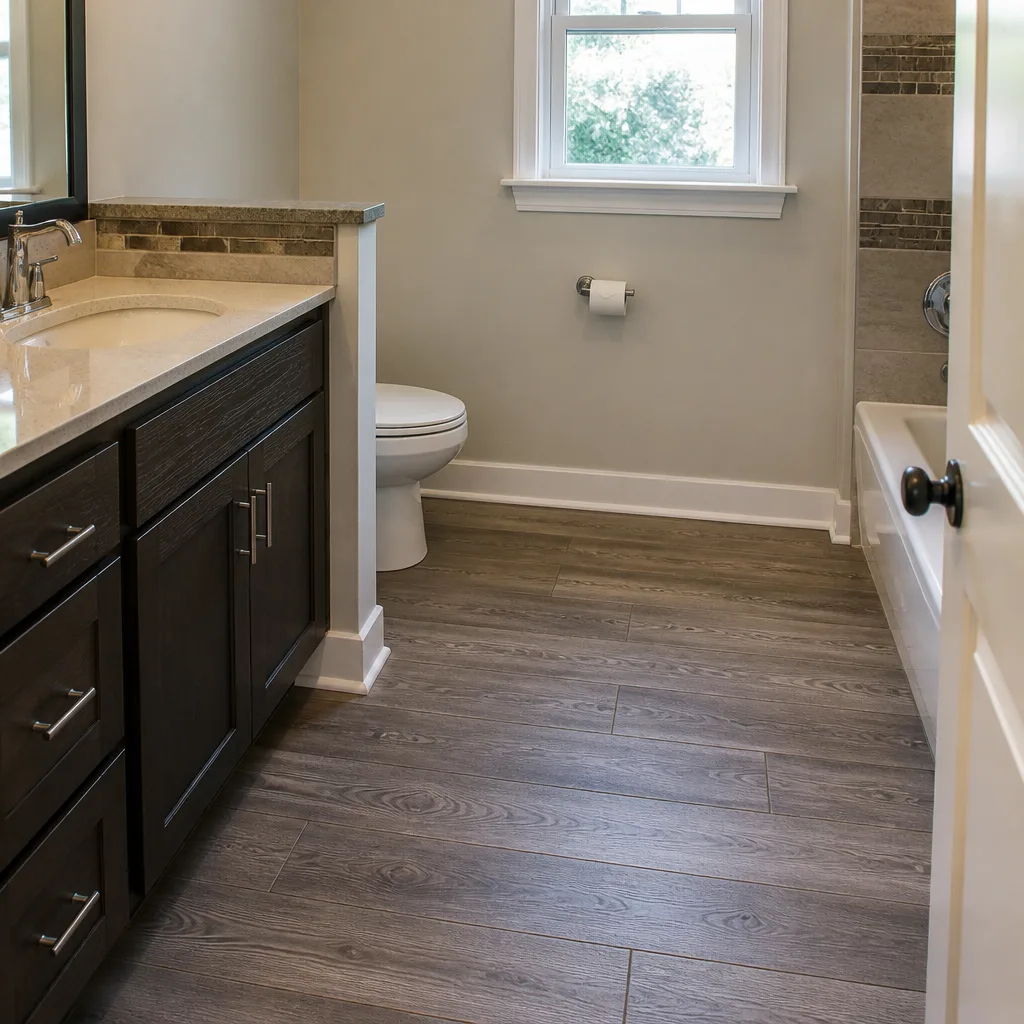
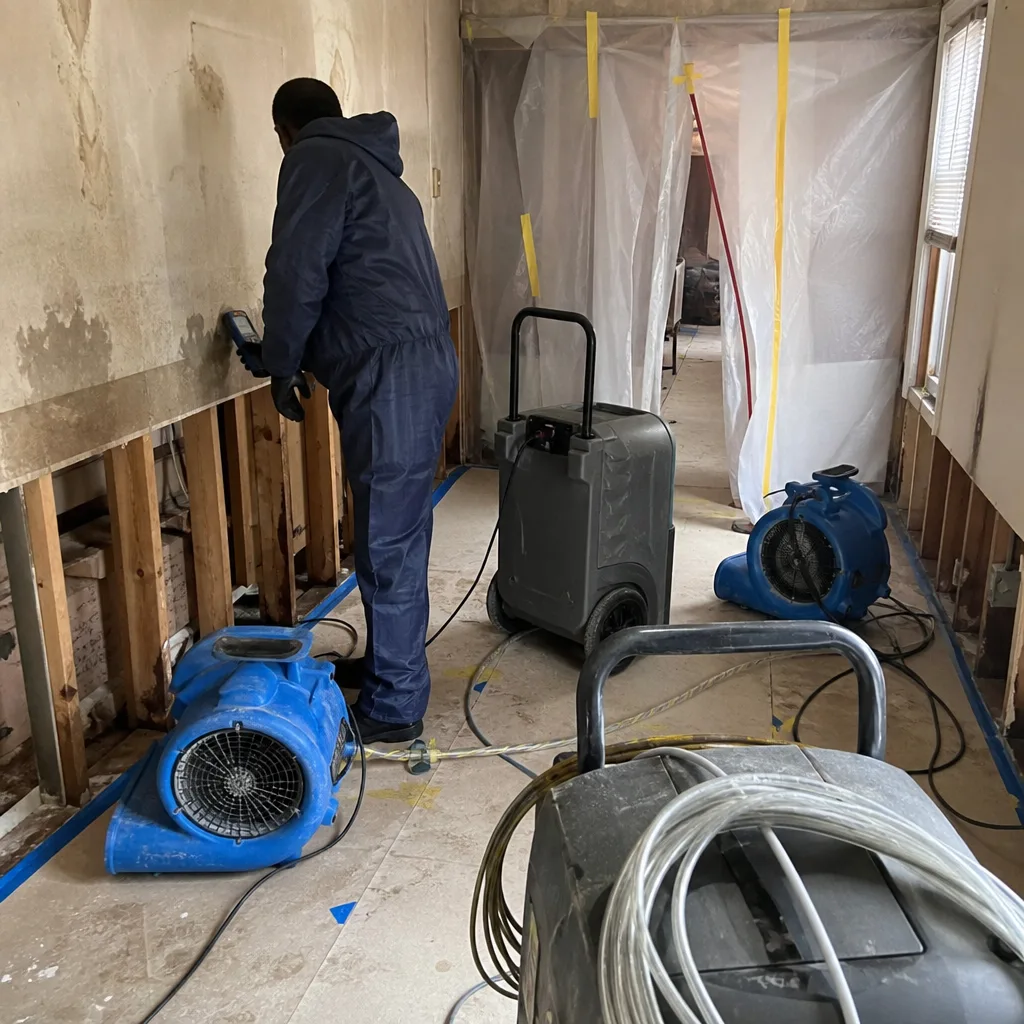 Before
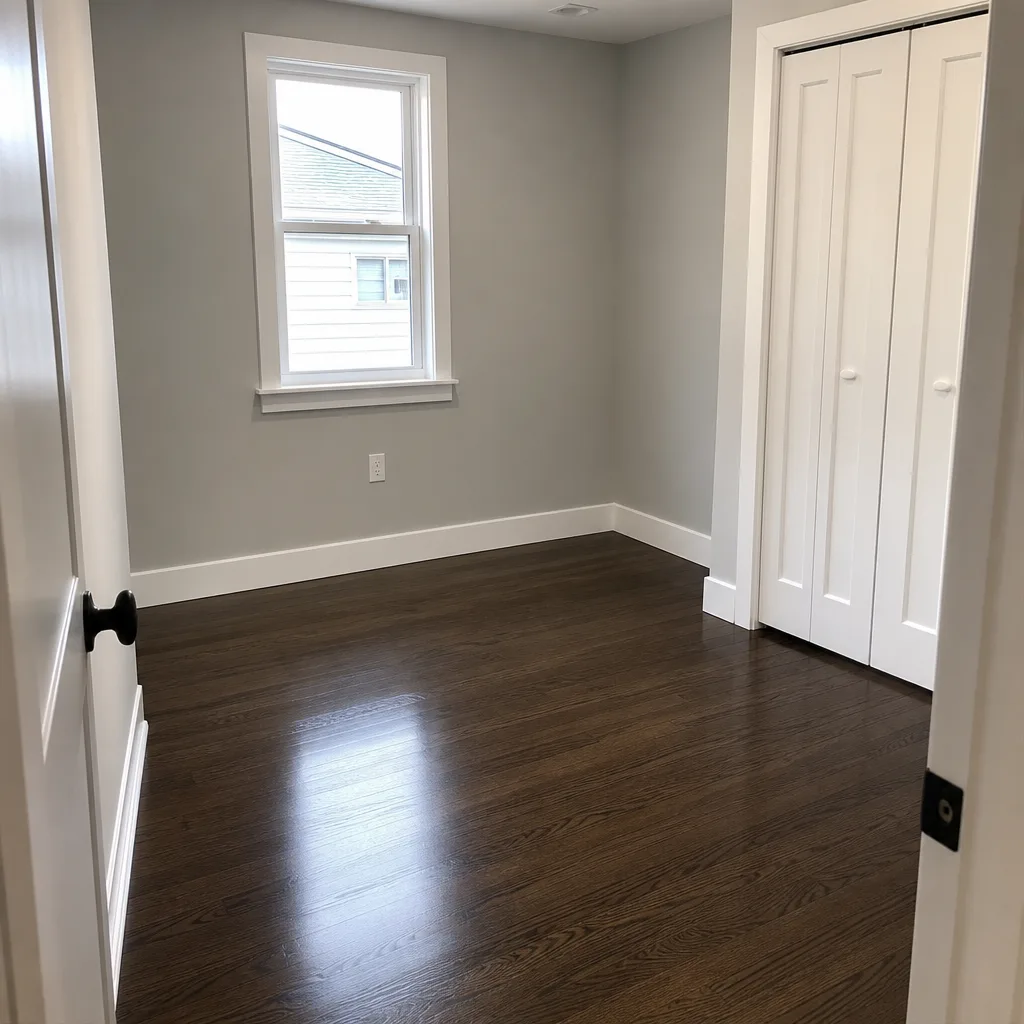 After
After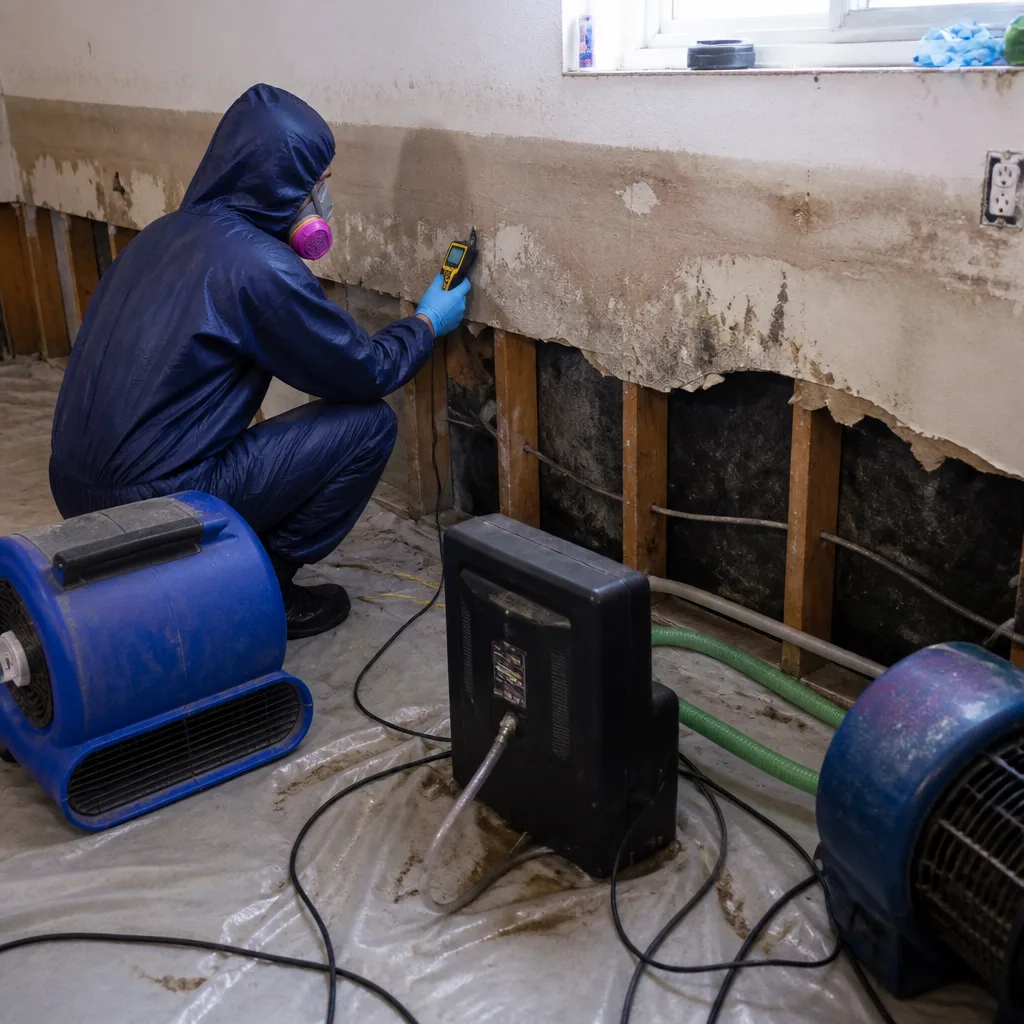 Before
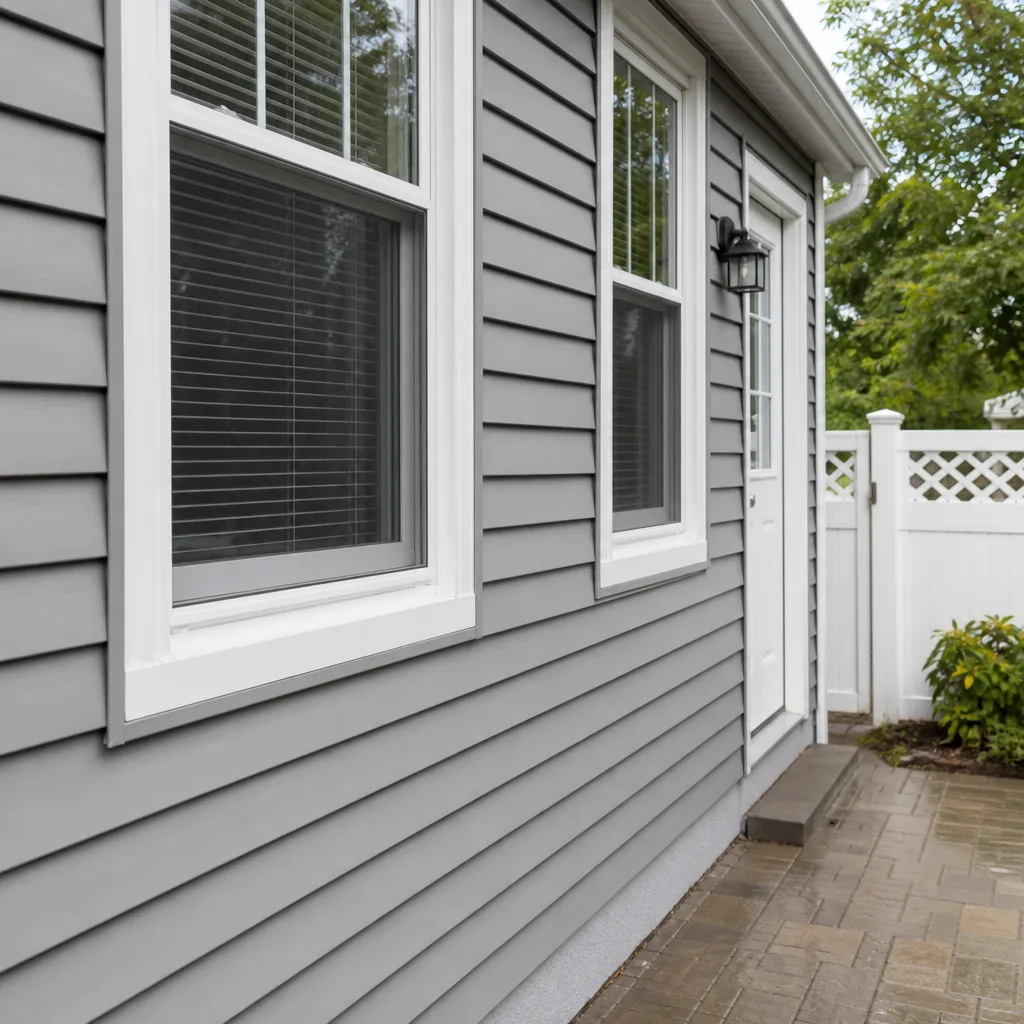 After
After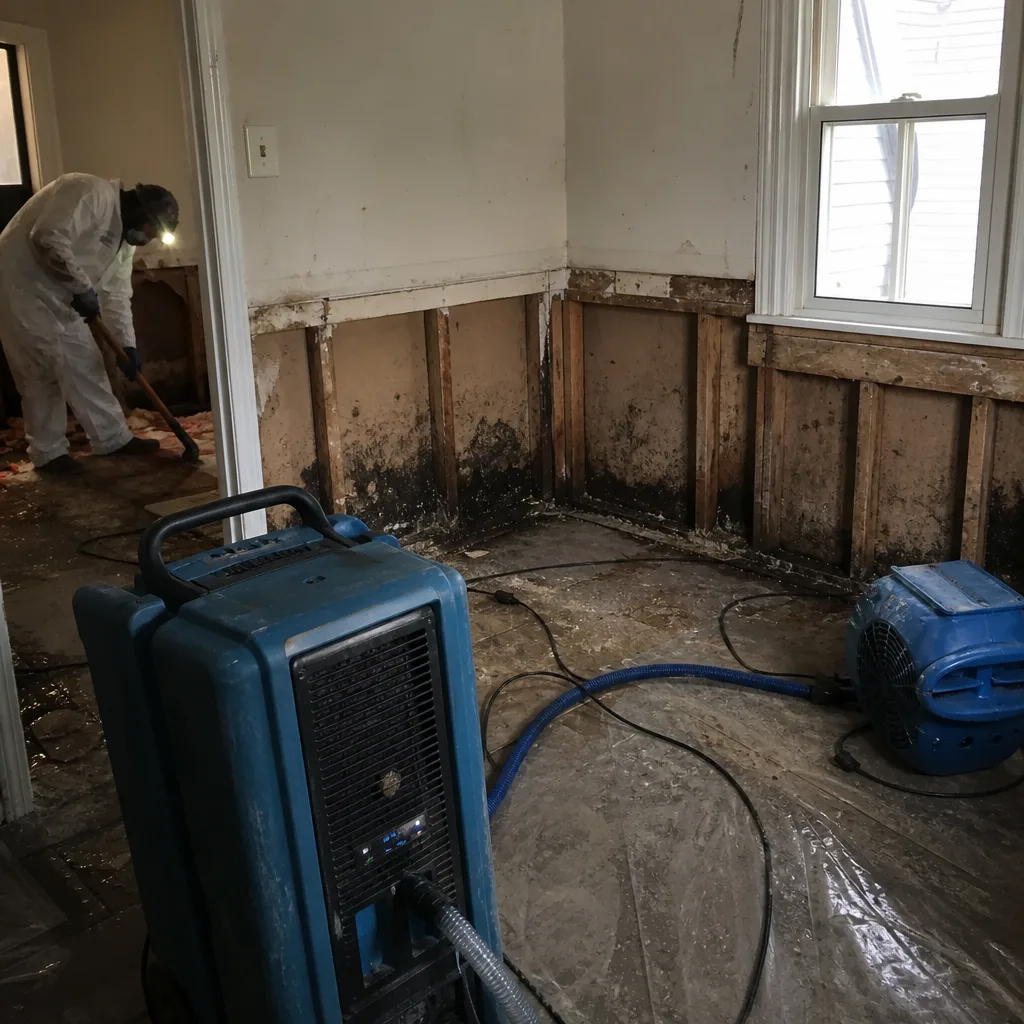 Before
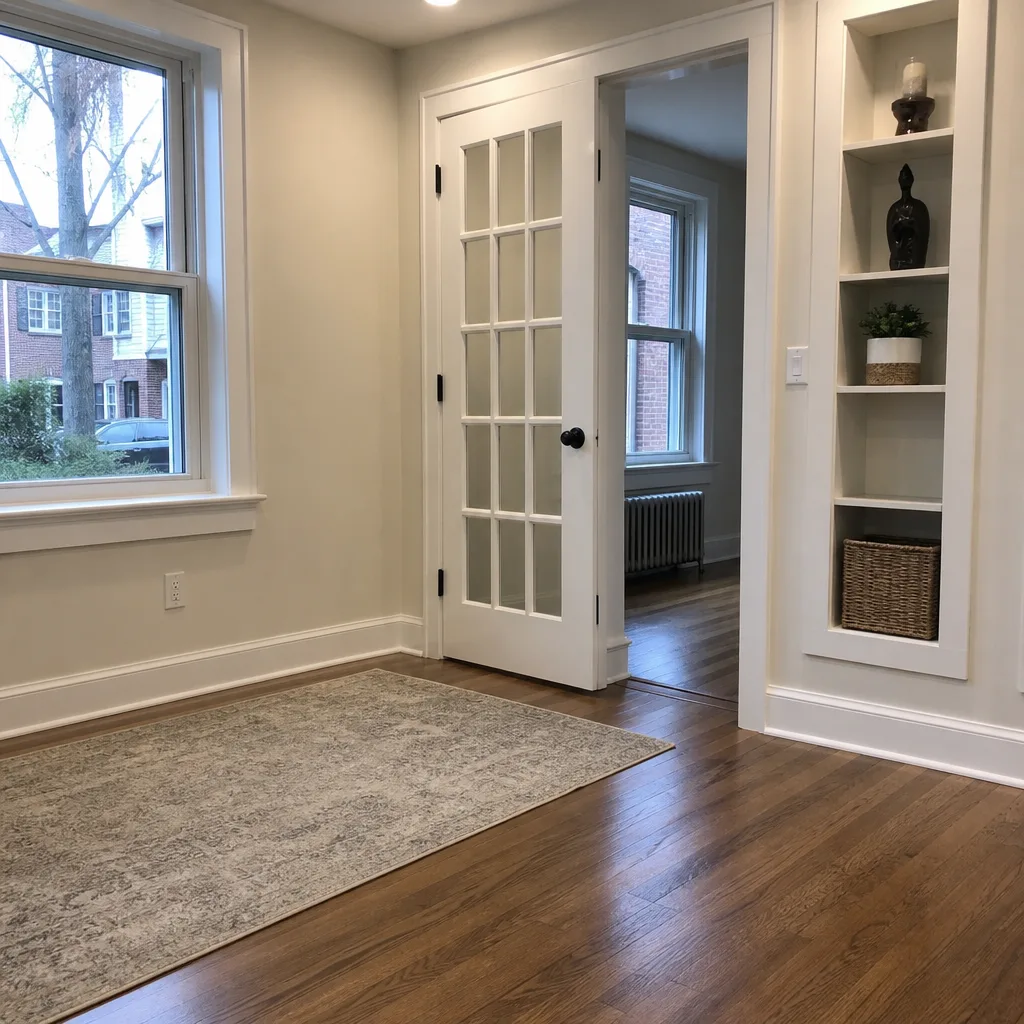 After
AfterHow to Hire a Damage Restoration Contractor in Flushing: A Step-by-Step Guide
A contractor who arrives in 30 minutes but hands you a blank authorization form is more dangerous to your insurance claim than one who arrives in two hours with a written scope and a line-item price. In our 12,000+ jobs since 2011, we’ve seen more claims denied in Flushing due to missing documentation than from actual workmanship failures. This guide-along with our complete guide to damage restoration in Flushing-reframes the hiring decision around the five documents a legitimate contractor must produce before a single fan is placed, because in Queens County’s dense housing stock, from pre-war co-ops in Murray Hill to single-family homes near Kissena Park, the paperwork gap is what separates a restored home from a disputed invoice.
Quick Answer
To hire a damage restoration contractor in Flushing, request five documents before signing anything: a written scope of work, a line-item estimate, an equipment placement plan, a daily drying log protocol, and warranty terms in plain language. Verify IICRC certification plus documentation standards that go beyond it, confirm the contractor’s insurance certificate names your specific property address, and reject any authorization form containing assignment-of-benefits language or verbal-only pricing.
Table of Contents
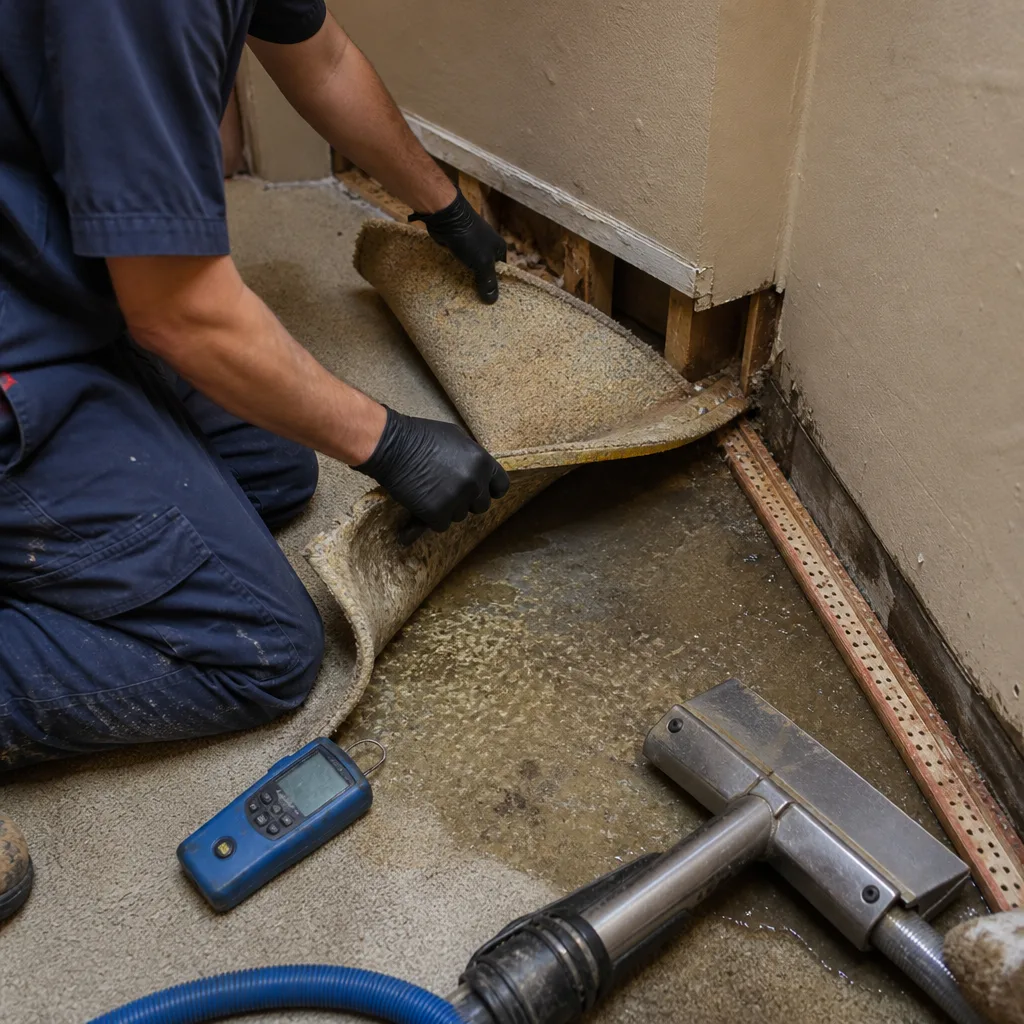
- The Five Documents Every Flushing Contractor Must Produce First
- Why IICRC S500 Is the Floor, Not the Differentiator
- Red Flags: Post-Storm Contractor Surges in Queens
- How to Read an Insurance Certificate (Most Homeowners Get This Wrong)
- The One Question That Reveals Everything: The Drying Log Test
- Flushing-Specific Considerations: Building Types, Codes, and Climate
- Common Mistakes to Avoid
- When to Call a Professional
- Frequently Asked Questions
- The Bottom Line
BeforeAfterThe Five Documents Every Flushing Contractor Must Produce First
Most homeowners in Flushing evaluate contractors on response time and friendliness. These matter, but they’re secondary to documentation. Without the right paperwork, your insurer can deny coverage for work already performed, leaving you with a demolished kitchen and a $40,000 bill. Here are the five documents we require our own estimators to present before any homeowner signs at DryMark Restoration Flushing.
1. Written Scope of Work
This is not a one-page summary. A proper scope lists every affected room, the specific materials involved (Category 1, 2, or 3 water classification per IICRC S500), the square footage of wet structure, and the drying class (1 through 4, based on percentage of wet surface area and material porosity). For a typical Flushing basement flood in a semi-detached home near Bowne Street, the scope should specify: “12×24 unfinished basement, concrete floor, block walls, Class 2 loss, approximately 288 sq ft affected, Category 2 water source.” Vague language like “dry basement” or “treat as needed” is a denial waiting to happen.
2. Line-Item Estimate
Every charge must be separable. “Water mitigation: $8,500” is unacceptable. The estimate should break out: moisture detection and mapping, extraction, equipment rental per day with unit count, demolition if required, antimicrobial application, and daily monitoring. At DryMark Restoration Flushing, Haven Standard Clause 1 requires this line-item format before work begins, with no scope-creep additions once the crew is inside. If a contractor says “we’ll figure out the details as we go,” the correct response is to close the door.
3. Equipment Placement Plan
Psychrometric drying, the science of controlling temperature, humidity, and air movement to remove moisture from materials, requires strategic equipment placement. The plan should show: number and type of air movers (we deploy units from XPOWER and B-Air with documented CFM ratings), dehumidifier capacity in pints per day, and any specialty equipment such as Injectidry cavity drying systems for wet wall assemblies. A Flushing row house with plaster-and-lath construction common in the 1920s builds near Sanford Avenue requires different equipment positioning than a post-1960 concrete slab home. The plan proves the contractor has assessed your specific structure, not applied a generic formula.
4. Daily Drying Log Protocol
This document explains what data gets recorded, how often, and who receives it. A proper log tracks: ambient temperature and relative humidity, specific humidity readings from affected materials (wood moisture content percentage, drywall moisture readings in grains per pound), equipment operating status, and psychrometric calculations showing progress toward dry standard. The protocol should specify that logs are shared with you and your adjuster within 24 hours of each visit. Without this, you have no evidence that drying was successful, and your insurer has grounds to reject the invoice.
5. Warranty Terms in Plain Language
Not a verbal promise. Not “call us if anything seems off.” Written terms, dated and signed, stating: what is guaranteed, for how long, what triggers the guarantee, and the response timeline. Our DryMark Restoration Flushing home page details the 365-Day Done Right Promise under The Haven Standard, a signed guarantee stamped on every job, not a marketing line. If a contractor won’t put warranty terms on paper, they don’t intend to honor them.
Why IICRC S500 Is the Floor, Not the Differentiator
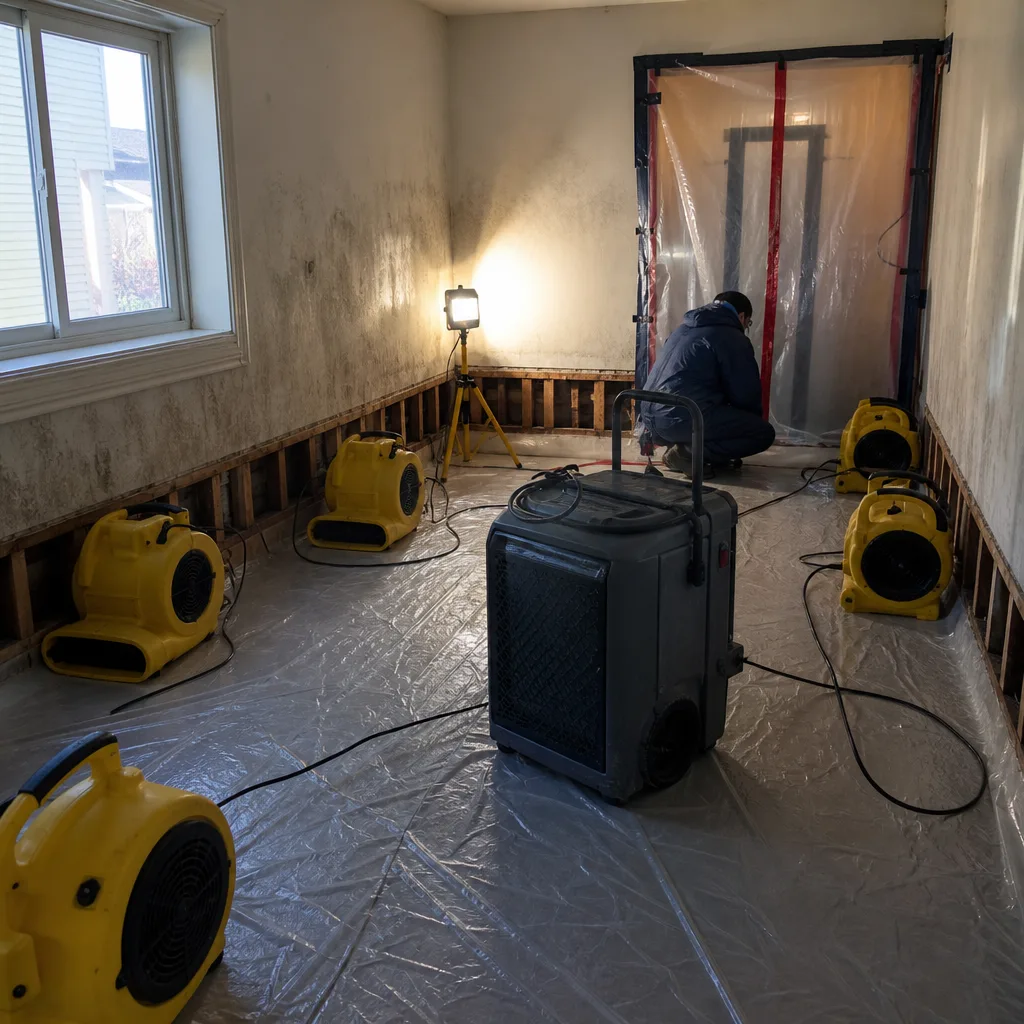
IICRC certification in water damage restoration (WRT) and applied structural drying (ASD) is the baseline professional credential. Any contractor working in Flushing without it is operating below industry minimums. But certification alone does not produce claim-ready documentation, and in Queens County’s insurance environment, documentation determines payment.
The IICRC S500 standard defines water categories, contamination levels, and drying principles. What it does not mandate is: daily moisture logging with timestamps, photo documentation with metadata, written price agreement before work begins, or direct adjuster coordination. These are documentation standards that separate compliant contractors from claim-ready contractors.
We’ve reviewed competitor invoices denied by insurers where the contractor held current IICRC credentials but failed to document: initial moisture readings (so the insurer couldn’t verify the loss existed), equipment placement rationale (so the equipment count appeared arbitrary), or dry standard achievement (so the insurer couldn’t confirm work was complete). The S500 tells a technician how to dry a structure. It does not tell a company how to prove they did it.
Additional documentation standards to verify:
- RIA (Restoration Industry Association) membership with documented continuing education
- IFA (Independent Floorcovering Inspectors Association) standards for flooring-specific losses
- Internal protocols exceeding IICRC minimums: photo records on every visit with GPS metadata, written scope revisions signed by both parties, and moisture mapping diagrams retained for minimum 3 years
Ask specifically: “Do your technicians create moisture mapping diagrams, or just take random readings?” Random readings without spatial documentation are nearly worthless in a dispute. The diagram should show room dimensions, reading locations, numeric values, and dates, forming a visual record of drying progress.
Red Flags: Post-Storm Contractor Surges in Queens
Flushing’s position in northeastern Queens, with proximity to Flushing Bay and the Long Island Sound, makes it vulnerable to storm surge and flash flooding during coastal weather events. Hurricane Ida in 2021 flooded basements from Willets Point to Flushing Meadows, and the contractor surge that followed revealed patterns every homeowner should recognize, which is why we published our Seasonal Damage Restoration Care for Flushing: Year-Round Homeowner’s Guide.
The Door-Knocker Pattern
Legitimate restoration companies in Flushing do not canvas neighborhoods after storms. If a contractor appears at your door uninvited, claims to be “working nearby,” or offers to “take a quick look,” this is not normal business development. It’s a lead-generation tactic common to storm-chasing operations that deploy to disaster zones, perform rapid work, and disappear before documentation disputes arise. Reputable contractors are found through your insurer’s vendor list, local referrals, or direct research, not door-to-door solicitation.
Verbal-Only Pricing
Storm surge contractors frequently offer “verbal estimates” or “ballpark numbers” with promises to “work it out with insurance later.” This violates Haven Standard Clause 1 and exposes you to unlimited liability. A written price before work begins is not bureaucratic overhead; it’s the mechanism that prevents a $15,000 mitigation from becoming a $35,000 invoice with unexplained additions. In Flushing’s competitive insurance market, where many homeowners carry high deductibles and supplemental coverage gaps, verbal pricing is a direct path to uncovered costs.
Assignment-of-Benefits Language
New York has restricted assignment-of-benefits (AOB) agreements in property insurance, but restricted does not mean eliminated. Some contractors embed AOB language in standard authorization forms, allowing them to file claims, negotiate settlements, and collect payment directly from your insurer, often without your ongoing involvement or approval of the final amount. Read every form before signing. If you encounter phrases like “irrevocably assign,” “direct payment authorized,” or “exclusive right to negotiate,” stop and consult your insurance agent. A legitimate contractor in Flushing performs work under your policy with your involvement, not in place of it.
How to Read an Insurance Certificate (Most Homeowners Get This Wrong)
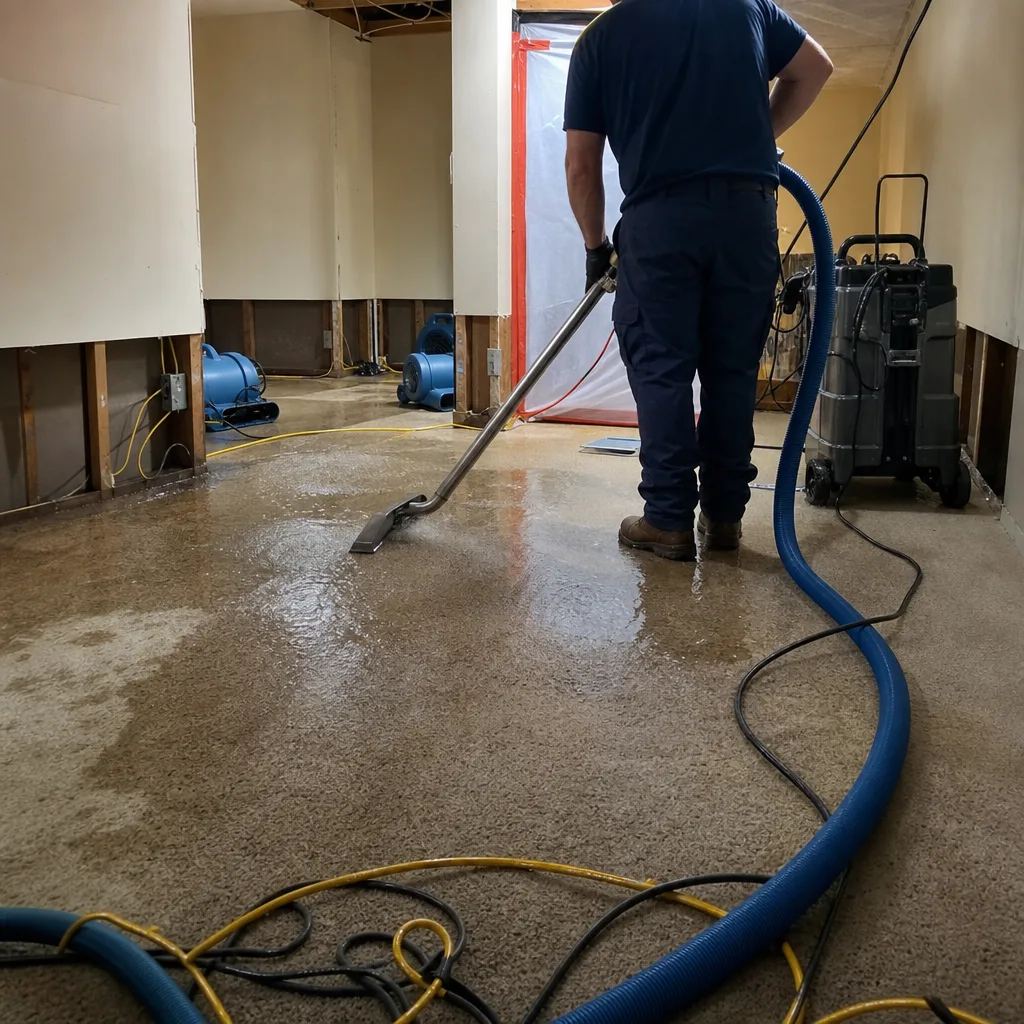
Every contractor should provide a certificate of insurance (COI) upon request. Most homeowners glance at the coverage limits and move on. The critical detail is in the “Additional Insured” or “Certificate Holder” section, and most Flushing homeowners have never checked it.
Request that the COI name your specific property address as additional insured, not just the contractor’s company name. Here’s why: if the contractor’s general liability policy lists only their business, and a worker is injured on your property or damage spreads to a neighboring unit in your Flushing co-op, the insurer can dispute whether your specific job site was covered. When your address appears on the certificate, coverage is explicitly tied to work performed at your location.
Verify these elements on every COI:
- General liability coverage minimum $1,000,000 per occurrence, $2,000,000 aggregate
- Workers compensation coverage for all employees (not just “statutory” coverage that excludes certain worker classifications)
- Your property address listed in the certificate holder or additional insured section
- Policy effective dates covering your project timeline
- Issuing insurance carrier rated A- or better by AM Best
Call the insurance carrier’s verification number on the certificate, not the contractor’s provided contact. Confirm the policy is active and the coverage matches the certificate. This 10-minute step has prevented more claim disasters than any other pre-hiring action we recommend.
The One Question That Reveals Everything: The Drying Log Test
After presenting the five-document requirement and reviewing the COI, ask this single question: “Can I show me a sample daily drying log from a completed job?”
The response will place the contractor into one of three categories, and you’ll know within 30 seconds which you’re dealing with.
Category one: Immediate, specific response. The contractor produces a redacted log showing dated entries, moisture readings by location, equipment inventory with serial numbers, psychrometric calculations (temperature, relative humidity, specific humidity, vapor pressure differential, the force that drives moisture from wet materials into drier air), and technician signature. This is a documentation-first operation. The vapor pressure differential, measured in inches of mercury, indicates whether your structure is actually drying or merely circulating wet air; a competent technician tracks this daily.
Category two: Delayed, vague response. “We can get that from the office,” or “Our logs are proprietary.” Proprietary documentation is an oxymoron. The drying log exists to communicate with you and your insurer. If it’s hidden, it’s either poorly maintained or fabricated after the fact.
Category three: Confusion or deflection. “We use moisture meters, if that’s what you mean,” or “The insurance company handles all that.” This contractor does not understand documentation standards and will produce an invoice your adjuster will challenge.
At DryMark Restoration Flushing, we maintain sample logs specifically for this request. The Haven Standard requires daily documentation to IICRC, RIA, and IFA standards, and we have no objection to demonstrating what you’ll receive. A contractor who treats this question as suspicious has something to hide.
Flushing-Specific Considerations: Building Types, Codes, and Climate
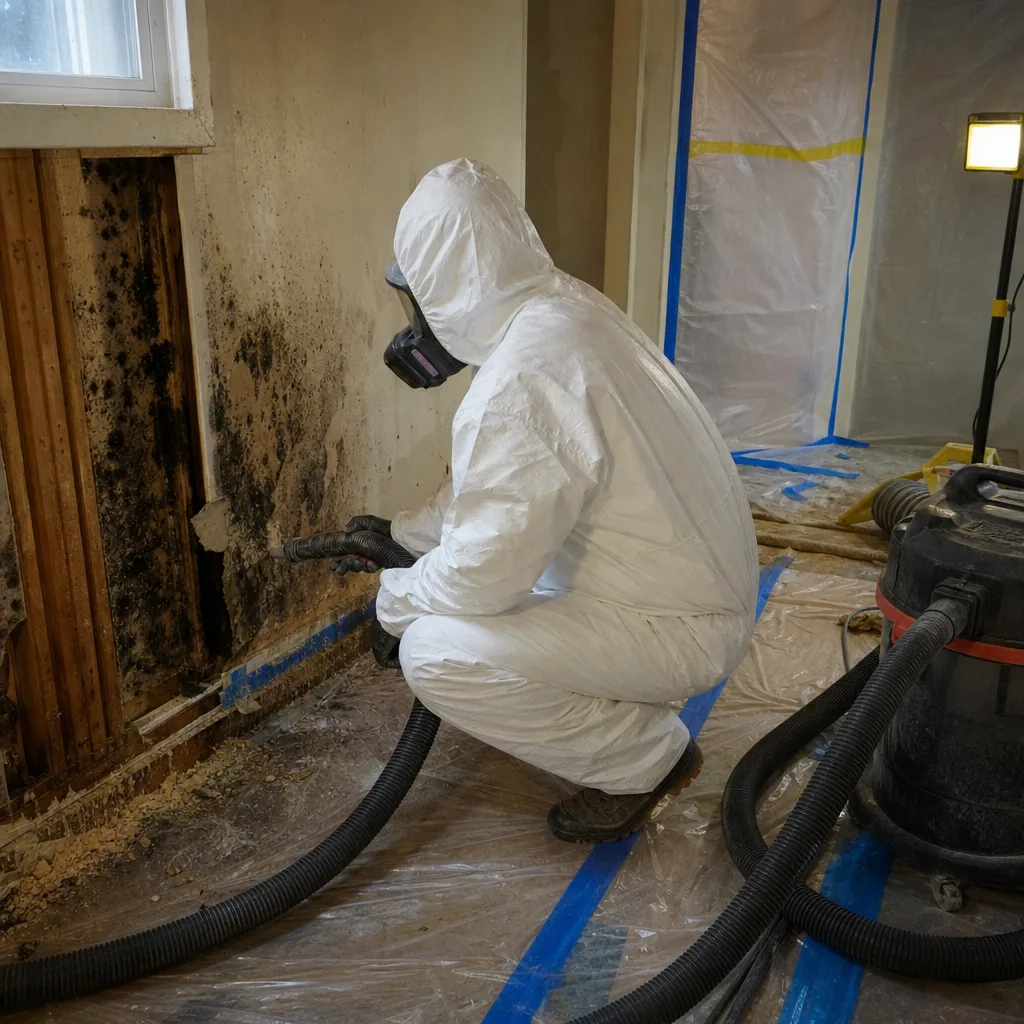
Flushing’s built environment creates restoration scenarios distinct from suburban Long Island or Manhattan high-rises. Understanding these local factors helps you evaluate whether a contractor has actual Queens experience or merely claims it.
Housing Stock and Construction Eras
Flushing contains significant pre-1940 housing, particularly in the historic district near Bowne House and extending through Murray Hill. These structures often feature: balloon framing (wall cavities that allow fire and water to travel vertically between stories), plaster-and-lath instead of drywall, and minimal or no vapor barriers. A contractor treating plaster like drywall, or failing to inspect balloon framing cavities with borescopes, will miss hidden moisture that causes mold blooms 6-8 weeks later.
Post-1960 construction, common in northern Flushing and newer developments near the Long Island Expressway, typically uses concrete slab foundations with steel stud framing. These structures present different drying challenges: slab moisture wicks upward through capillary action, requiring specific dehumidification strategies, and steel studs conduct cold, creating condensation risks if drying is incomplete.
Climate and Seasonal Patterns
Flushing’s humid subtropical climate, with summer relative humidity regularly exceeding 75%, extends drying timelines compared to drier regions. A contractor quoting 3-day drying in July without specifying dehumidifier capacity in pints per day is guessing. Our Water Damage Restoration in Flushing page details how we adjust equipment specifications for seasonal humidity variations.
Winter brings frozen pipe bursts, particularly in unheated basements and exterior wall plumbing. The 2022-2023 winter saw multiple pipe freeze events in Flushing’s older housing stock when homeowners lowered thermostats during energy price spikes. Contractors responding to winter losses must address not just the water damage but the pipe repair coordination and temporary heating requirements to prevent re-freeze during drying.
Regulatory Environment
New York City Department of Environmental Protection (DEP) regulations govern discharge of extracted water into storm drains, particularly important for large losses requiring truck-mounted extraction. NYC Department of Buildings permits may be required for demolition of load-bearing walls or structural members. A contractor operating without permit awareness risks work stoppage and fines that become your problem.
Flushing’s position within Queens Community Board 7 means certain block and lot configurations have additional landmark or zoning considerations. Contractors should verify whether your property falls within any special district before commencing exterior work or dumpster placement.
Co-op and Condo Considerations
Many Flushing residents live in co-op or condominium buildings, particularly in the downtown area near Main Street and Roosevelt Avenue. These properties require: coordination with building management for water shut-off, access to common utility spaces, and compliance with alteration agreements that may specify approved contractors or require additional insurance certificates naming the building corporation. A contractor unfamiliar with co-op protocols can cause work delays and board disputes that extend your displacement.
Common Mistakes to Avoid
- Prioritizing arrival speed over documentation quality. A 30-minute response with blank forms creates more problems than a 90-minute response with complete paperwork. In Flushing’s traffic patterns, particularly during Mets games at Citi Field or rush hour on the Van Wyck Expressway, realistic arrival times for properly equipped crews run 45-90 minutes.
- Signing authorization forms without reading for AOB language. The form presented as “just permission to enter” may contain clauses transferring your insurance rights. Read every paragraph.
- Accepting “insurance will cover it” as pricing verification. Coverage determinations happen after documentation review, not before. A written price protects you regardless of coverage outcomes.
- Hiring based on neighbor referral without verifying the neighbor’s claim was paid. A contractor who performed friendly, fast work that the insurer then denied is not a successful referral. Ask: “Did your claim pay without dispute, and did you see the drying logs?”
- Ignoring moisture in hidden cavities. Flushing’s older housing with balloon framing and plaster construction hides water pathways. A contractor who doesn’t use thermal imaging and borescopes is guessing at the damage extent.
- Failing to verify the COI names your property address. This single check prevents coverage disputes that have cost Flushing homeowners tens of thousands in uncovered liability.
- Not requesting a second opinion on competitor estimates. At DryMark Restoration Flushing, we offer a Free Second Opinion on any competitor’s written estimate at no charge. This service exists because we’ve reviewed estimates with 40% equipment over-specification and scope omissions that would have caused mold recurrence.
When to Call a Professional
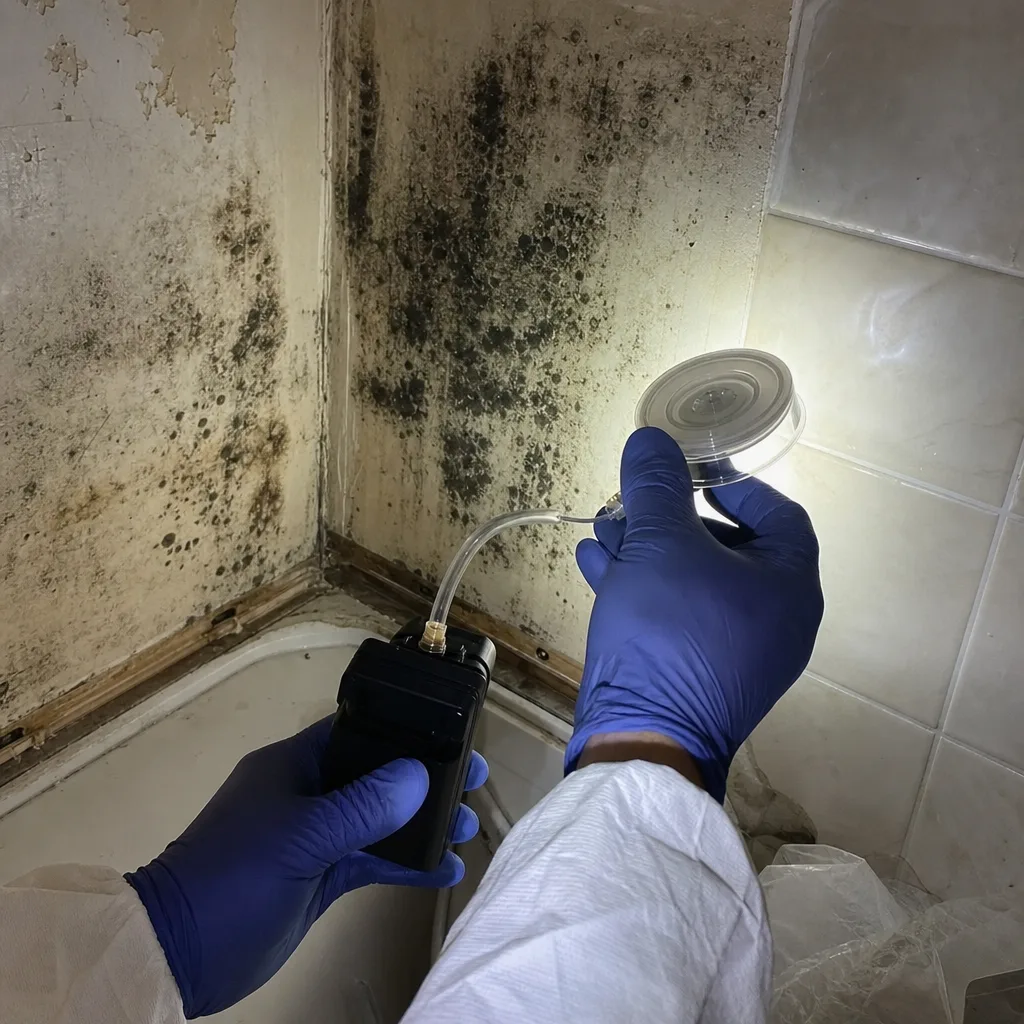
Contact a damage restoration contractor immediately when: water has affected finished living space or structural materials (not merely surface water on tile); you detect musty odors or visible mold growth, particularly in Flushing’s humid summer months when Mold Remediation in Flushing becomes critical; fire or smoke damage has occurred, as Fire & Smoke Damage Restoration in Flushing requires specialized cleaning protocols for soot and odor; sewage backup is present, creating Category 3 contamination with health hazards requiring professional containment; or storm damage has compromised roofing or exterior envelope, allowing ongoing water intrusion.
DryMark Restoration Flushing offers free estimates in Flushing. Call (516) 386-9007 to speak with a live person, 24 hours a day, 7 days a week, with no voicemail on emergency lines. Every estimate includes a written scope and line-item pricing before any work begins, per Haven Standard Clause 1.
Frequently Asked Questions
Typical residential water mitigation in Flushing ranges from $2,800 for limited Category 1 losses affecting a single room to $12,000+ for Category 2 or 3 losses with basement involvement and demolition requirements. Category 1 (clean water from supply line) costs less than Category 2 (gray water with contaminants) or Category 3 (sewage or floodwater). Exact pricing requires on-site moisture mapping and scope development. Call (516) 386-9007 for a written estimate at no charge.
Coverage depends on your policy terms, the water source, and documentation quality. Sudden, accidental discharge from plumbing is typically covered; gradual leaks or maintenance failures often are not. The contractor’s documentation, specifically the daily drying log and photo record, heavily influences adjuster approval. At DryMark Restoration Flushing, we coordinate directly with adjusters and provide the documented evidence that supports claim payment. Bring your policy declaration page to our estimate appointment for specific coverage guidance.
Realistic arrival times for properly equipped, documented crews range from 45 minutes to 2 hours depending on your Flushing location, traffic conditions, and current demand. During major weather events, times extend. Beware contractors promising 15-20 minute arrivals; this often indicates an unstaffed operation dispatching from distant locations with incomplete equipment loads. Our live dispatch at (516) 386-9007 provides accurate ETA estimates based on crew location and traffic.
Remediation is required when mold growth exceeds 10 square feet, involves HVAC systems, or follows Category 2 or 3 water damage. Cleaning suffices for limited surface growth on non-porous materials with confirmed moisture source eliminated. A competent contractor distinguishes these with air sampling and surface testing, not visual guesswork. Our Mold Remediation in Flushing service includes written remediation plans with containment specifications and post-remediation verification.
You retain control of your claim. A legitimate contractor documents work thoroughly and communicates directly with your adjuster at your request, but does not negotiate settlements or accept payments without your approval. Assignment-of-benefits arrangements, where the contractor controls the claim, are restricted in New York and generally disadvantageous to homeowners. We provide documentation; you direct its use.
Professional-grade drying equipment from manufacturers like XPOWER, B-Air, and Injectidry indicates investment in measurable performance. XPOWER and B-Air produce air movers with documented CFM and static pressure ratings; Injectidry manufactures cavity drying systems for wall and ceiling assemblies. Equipment age matters too: dehumidifiers lose efficiency over time. Ask the contractor’s equipment replacement cycle. At DryMark Restoration Flushing, we maintain current-generation equipment and document serial numbers on every job.
The Bottom Line
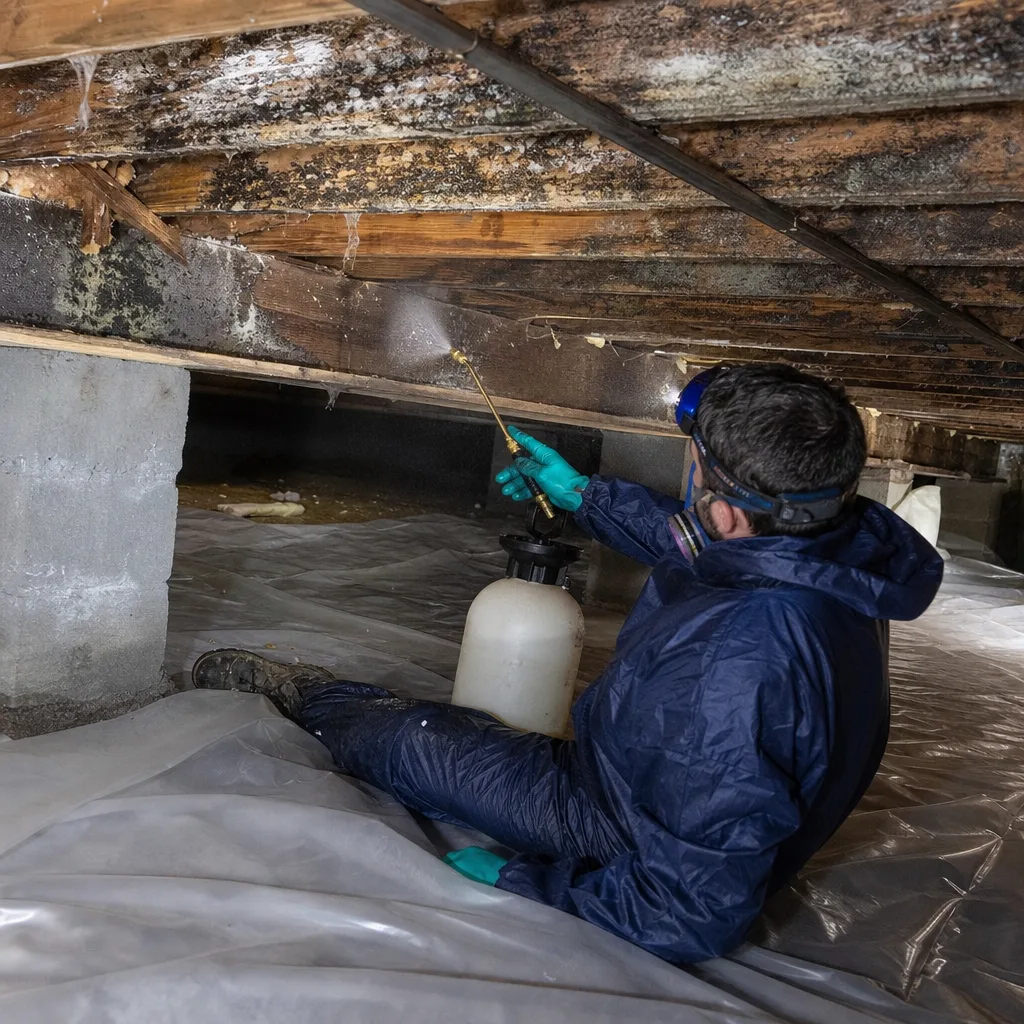
Hiring a damage restoration contractor in Flushing is a documentation decision disguised as a service decision. The contractor who produces five documents before work begins, a written scope, line-item estimate, equipment plan, drying log protocol, and warranty terms, demonstrates the organizational competence that translates into claim payment and lasting results. Verify IICRC certification as baseline, then demand the documentation standards that exceed it. Read every authorization form for hidden assignment language. Confirm your property address appears on the insurance certificate. Ask to see a sample drying log. These steps, not arrival time promises, separate contractors who restore homes from those who create disputes. For more guides & resources on protecting your property, visit our blog.
Written by Alicia Brennan, Owner at DryMark Restoration Flushing, serving Flushing since 2011.